
Friendship Park Nears a Billion Birr in Revenue in 48 Months
A 46-hectare green space—roughly 65 football pitches—helping cool the city and manage stormwater beyond its aesthetic value.
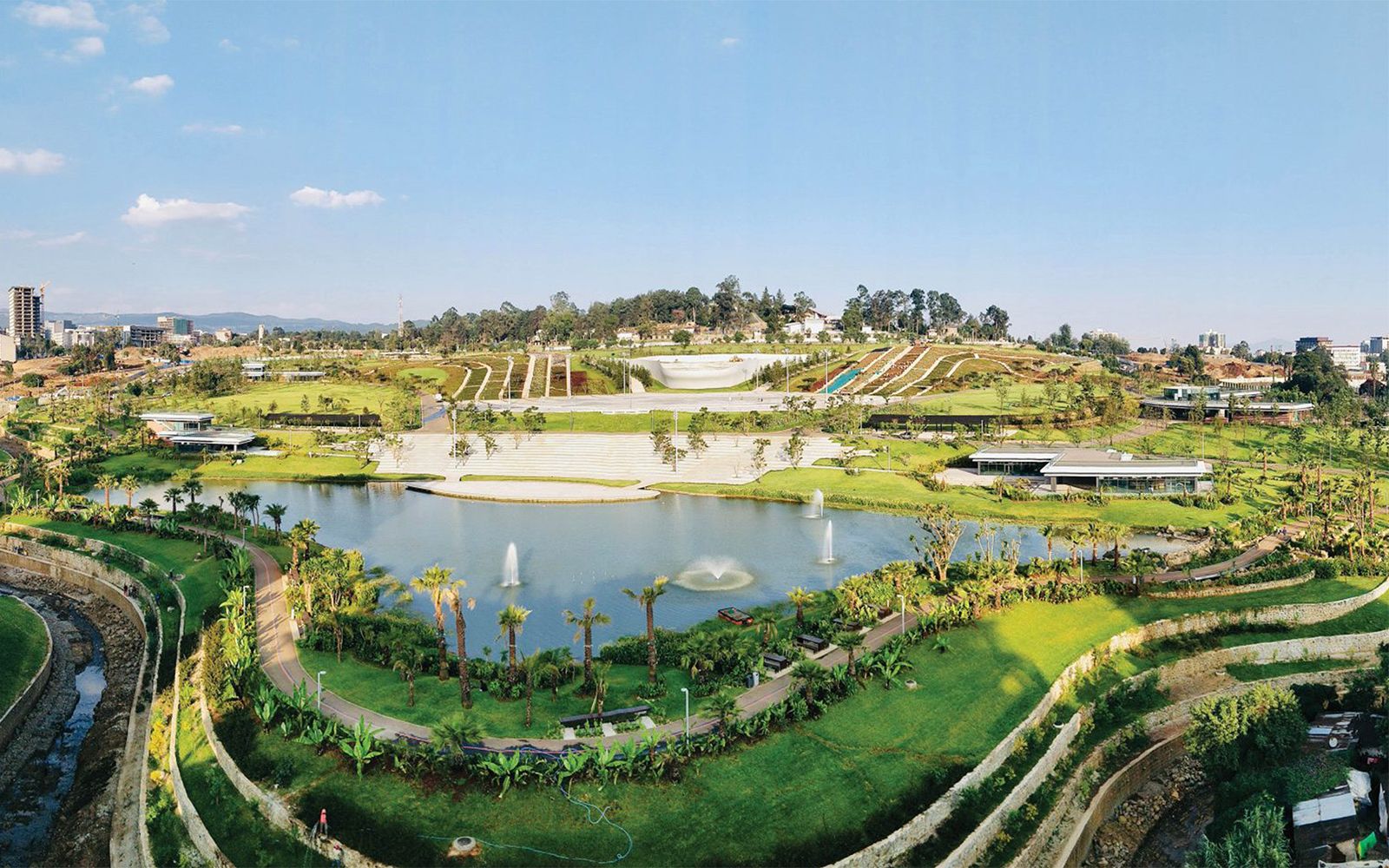
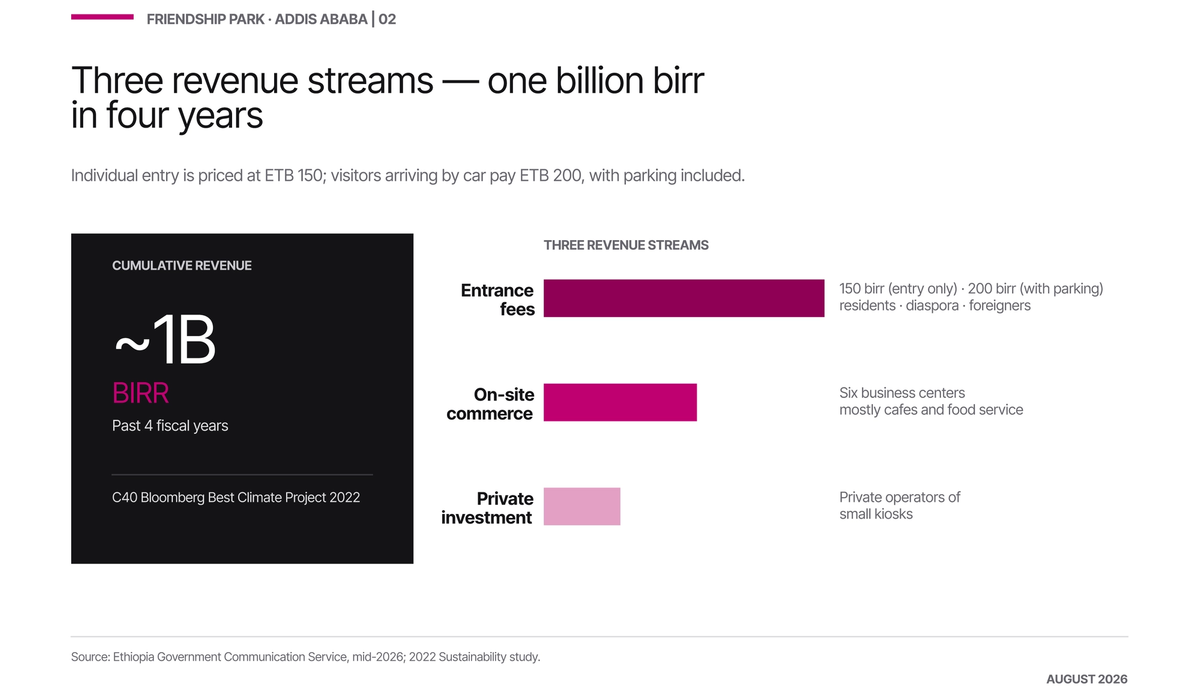
Prime Minister Abiy Ahmed said in mid-2026 that Friendship Park has generated close to one billion birr over the past four years, alongside job creation through direct and indirect activities. The figure marks the park as one of the clearer examples on the continent of a public green space engineered to fund itself.
Ethiopia's approach treats parks as productive infrastructure. Land gets upgraded. People gain access to recreation. Commercial concessions inside the park generate revenue. Tourism and local spending rise around the site. Green space absorbs flood and heat costs the state would otherwise carry. And the responsible authority ends up with a recurring stream of revenue and value it can reinvest.
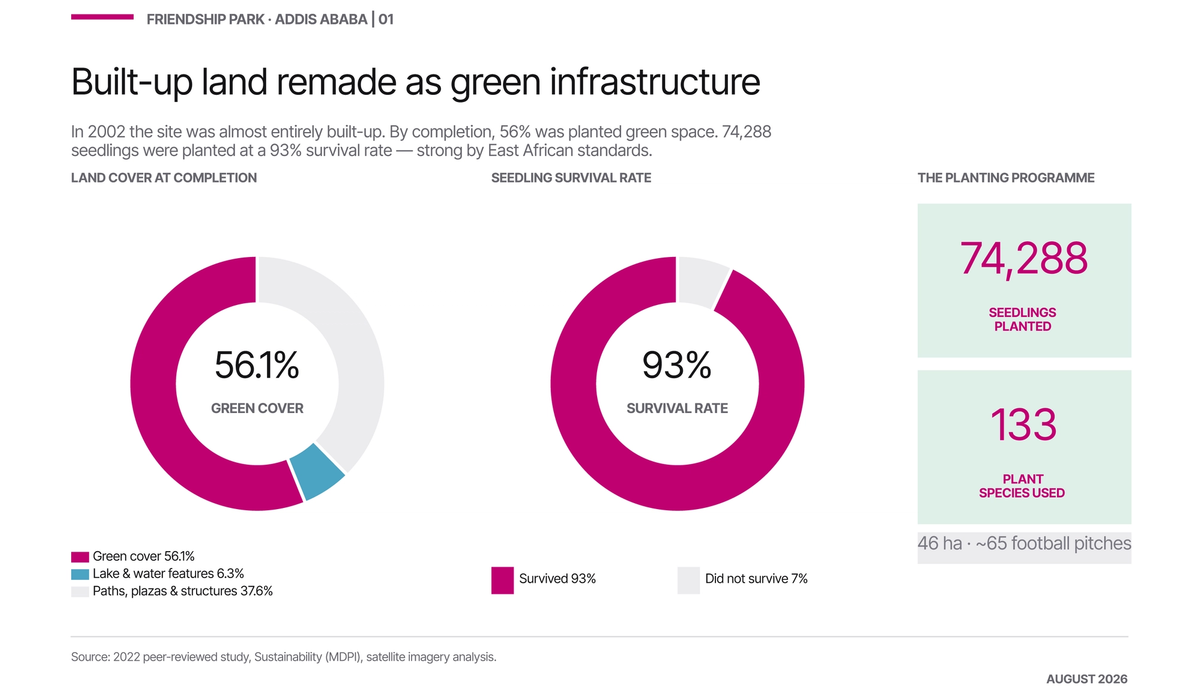
Friendship Park sits on ground that looked very different two decades ago. Satellite imagery cited in a 2022 peer-reviewed study in the journal Sustainability shows that in 2002, the site was almost entirely built-up land. By the time construction finished, green coverage reached 56.1 percent, with an additional 6.3 percent given over to an artificial lake and water features. More than 74,288 seedlings across 133 plant species were planted, with a 93 percent survival rate — a strong result relative to comparable reforestation efforts elsewhere in East Africa. The upgrade converted marginal land in the center of the capital into an asset the state now manages for return.
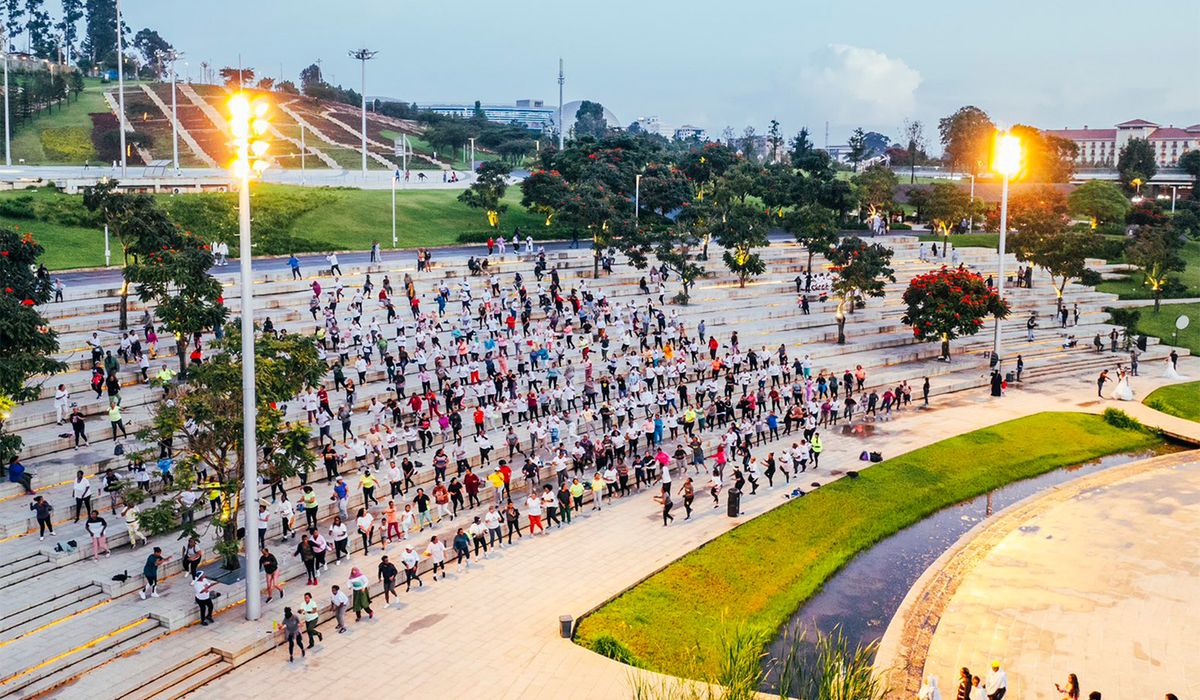
The park opened to the public on September 10, 2020, with an entrance fee set at ETB 150, and 200 birr for cars — roughly USD 1–1.5 — applied equally to Ethiopian residents, diaspora visitors, and foreigners, with discounts for children and students. That single, simple price point does two things at once: it keeps the park broadly accessible, and it turns footfall into a metered revenue line. More than 500 people visit on an average day, and the park has become the default venue for university graduations, national celebrations, weddings, and cultural events at its central amphitheater, each of which adds to the volume the entrance fee captures.
Six business centers operate inside the park, most of them cafés and food service outlets, generating income on top of ticket sales. Small kiosks scattered through the grounds add further points of sale for snacks, coffee, and souvenirs, without the capital-intensive footprint of standalone outlets. Friendship Park anchors a wider stretch of hospitality and commercial activity in central Addis Ababa. Its main entrance faces the Sheraton Addis, and the park sits within walking distance of Unity Park, the Adwa 00KM Museum, and other draws that together make the Arat Kilo–Piassa corridor one of the city's densest visitor circuits. The project's recognition in the C40 Cities Bloomberg Philanthropies “Best Climate Projects” awards in 2022 has also given it standing as a reference case for climate-oriented urban tourism, a profile that helps draw international visitors and delegations to the site.
The park's greenery and water features do measurable work beyond aesthetics. Large urban parks with substantial tree and water cover are documented to reduce local surface temperatures and moderate flood risk along adjacent river channels — functions that Friendship Park performs for the Bantyiketu river corridor it was built around. That is a cost that the state does not have to absorb elsewhere in its drainage and heat-mitigation budget, making the park's ecological function a quiet contributor to its overall economics.
Friendship Park was developed as the pilot project of Beautifying Sheger, an initiative driven by the Prime Minister's Office. Having become a national model for the new generation of public spaces emerging across Ethiopia, it plays a significant role as a catalyst for economic opportunity, social inclusion, and urban transformation.
Ethiopia's government has signaled it intends to extend the model to other sites in the capital and to regional urban centers. The core mechanics are straightforward enough to travel: upgrade the land, price access to keep it accessible while generating volume, layer in concessions and low-cost on-site retail, and let the ecological upside offset costs the state would otherwise carry elsewhere. Nearly a billion birr in four years is the clearest evidence yet that a public park in Addis Ababa can function as a balance-sheet item rather than a line of annual expenditure.