
Zambia Asks Farmers to Stop Selling Maize Because of El Niño
Sitting on a massive $1.1 billion mountain of state-bought grain, the government is urging rural households to lock away their surplus as weather experts warn of severe dry spells returning to the region.

On paper, Zambia should be celebrating a massive agricultural win. The country harvested a record 4.94 million tonnes of maize in the 2025/2026 season—comfortably above the 4.2 million tonnes needed to feed its population. Instead, the government is sounding the alarm over how fast that grain is leaving rural villages. President Hakainde Hichilema has warned traditional leaders and rural households not to sell off all their maize for quick cash, while the Millers Association of Zambia is pressing the government to strictly regulate exports. Behind the panic is a rapidly building climate shock: meteorologists warn that a returning El Niño weather pattern could bring severe dry spells between December 2026 and February 2027, right when the next maize crop enters its most critical growth stage.
To understand why farmers are tempted to empty their storage sheds despite the drought warnings, you have to look at the money. During the recent buying window, the state-run Food Reserve Agency (FRA) set its floor price at K347 ($13) per 50-kilogram bag—a massive 58 percent premium over the roughly K220 paid by private traders on the open market. Drawn by that high state price, more than 846,000 small farmers rushed to sell their extra grain to the government, while others offloaded bags to middlemen just to raise cash for seed and fertilizer. For rural families, this is a dangerous trap: if El Niño ruins the upcoming rains, households that sold their entire harvest today will be forced to buy back processed maize meal at sky-high drought prices just months later.
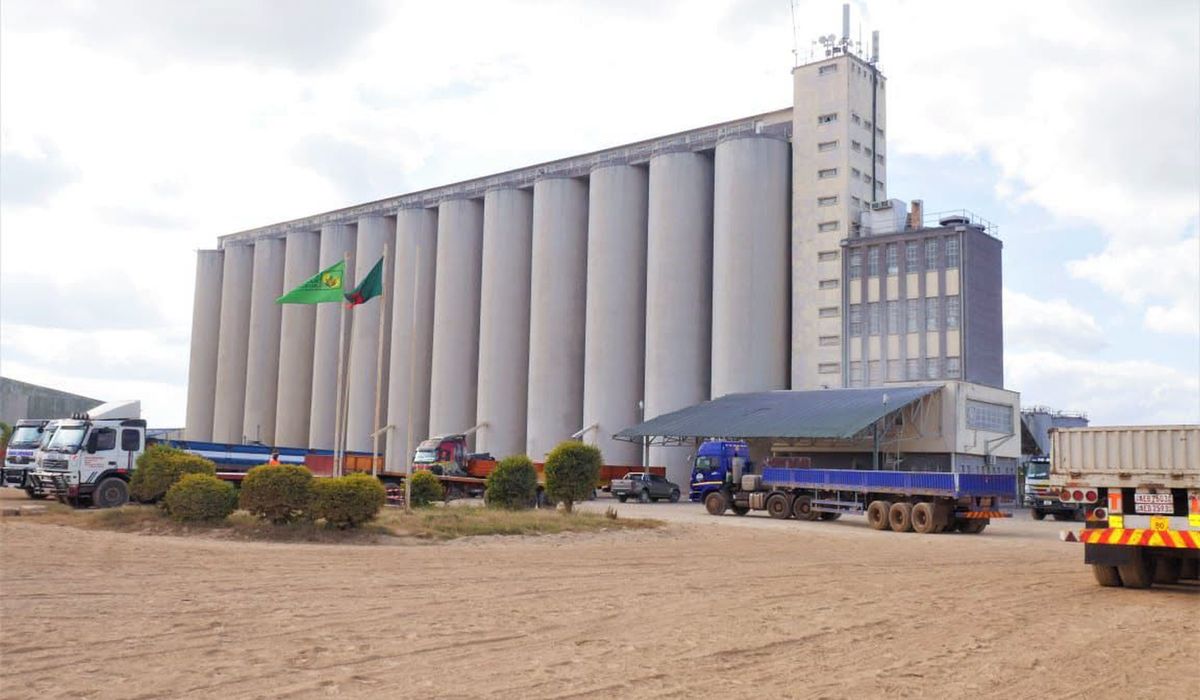
That massive wave of farmer sales has created a $1.1 billion balancing act for the government. After two seasons of aggressive buying, the Food Reserve Agency is now holding 3.1 million tonnes of maize—the largest strategic stockpile in Zambian history. To picture that, it is roughly equal to the physical weight of 77,500 fully loaded semi-trailer trucks. At purchase cost, that mountain of grain represents K21.3 billion ($1.1 billion), which is about 2.4 percent of Zambia’s entire annual economic output. It is nearly double what the International Monetary Fund (IMF) projected the country would spend on agricultural subsidies. While the agency has agreed to export 540,000 tonnes to Kenya, it has tightly limited broader sales to protect the country's physical food buffer before the drought hits.
The collision between this bumper-harvest spending and the looming El Niño is forcing hard choices at the Ministry of Finance. Because the Food Reserve Agency bought more than five times the 300,000 tonnes originally budgeted for this year, Finance Minister Situmbeko Musokotwane confirmed recently that the Treasury is freezing fresh maize-buying funds for the agency next season to keep Zambia’s IMF fiscal targets on track. On the same day, the government officially cut its economic growth forecasts for 2027 and 2028 down to 4.9 percent and 5.0 percent, pointing directly to the El Niño threat and global supply disruptions pushing up fuel and fertilizer costs.
For Lusaka, the scars of the last climate crisis are still too fresh to ignore. During the 2023/2024 El Niño drought, prolonged dry spells wiped out up to 70 percent of maize yields across 84 of Zambia's 116 districts, plunging millions into hunger and forcing the government to seek $900 million in emergency relief. With the U.S. Climate Prediction Center estimating a 75 percent chance that Pacific warming between October and December 2026 could rank among the strongest El Niño events since 1950, Zambia is betting on conservation over quick cash. If the rains fail again, that costly 3.1-million-tonne state stockpile—alongside every bag of maize kept locked in village storage sheds—will instantly transform from a financial headache into the country’s ultimate economic lifeline.