
Afreximbank Holds Strategic Plan 07 Retreat in Addis Ababa, Meets Ethiopian Leadership
The bank that underwrote $2.5 billion for Dangote, launched a trading house with former Shell traders, and now manages $48.5 billion in total assets is deciding where to put the next round of capital.
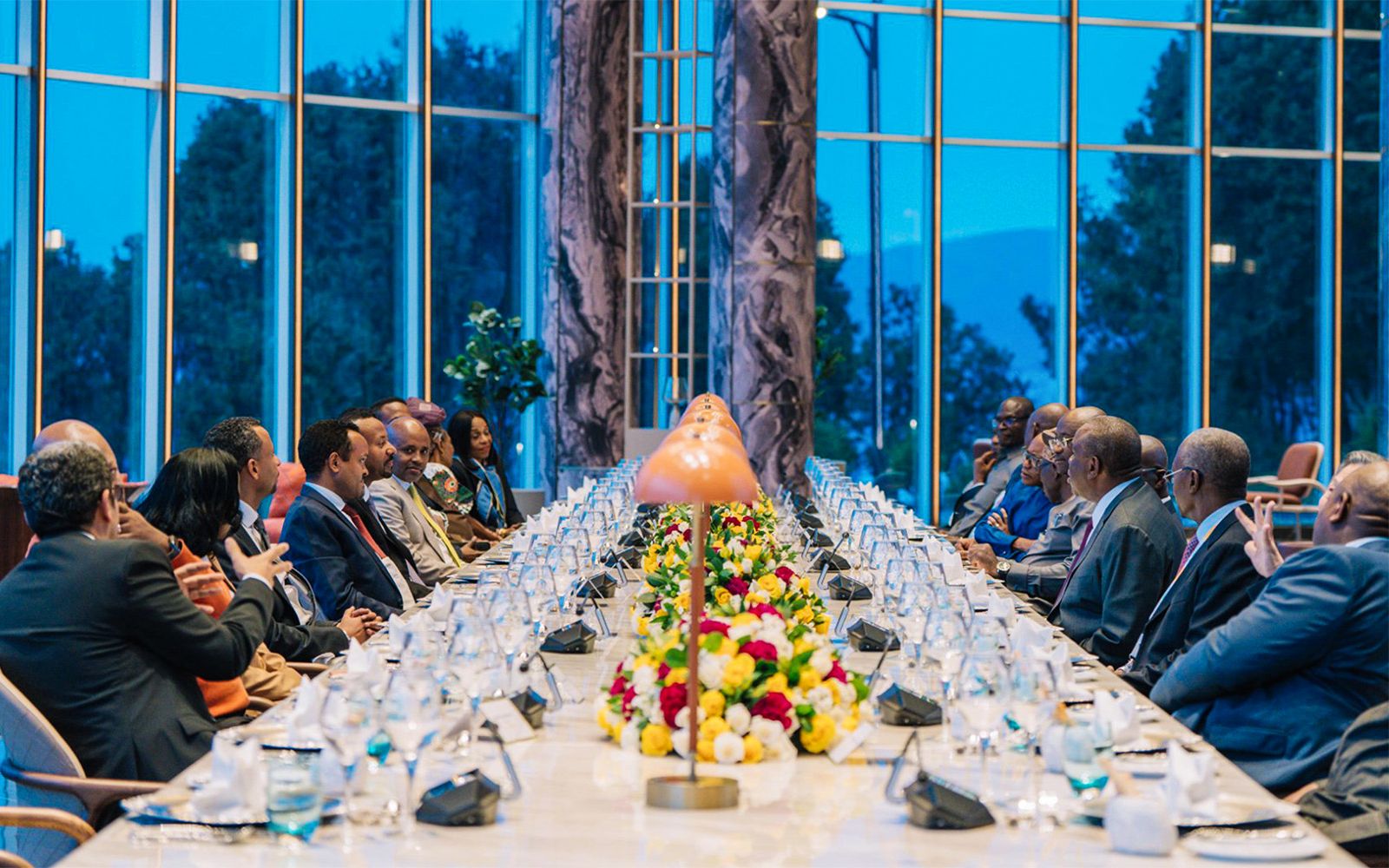
Afreximbank operates on five-year strategic plans. The current one — Impact 2026: Extending the Frontiers — runs through this year. The board and management are now in Addis Ababa for the Strategic Plan VII retreat, designing the framework that will guide the bank’s capital deployment from 2027 to 2031. Brook Taye, CEO of Ethiopian Investment Holdings, presented to the board on Ethiopia’s economic transformation programme and the investment opportunities available to strategic partners through EIH. Dr. George Elombi, Afreximbank’s President, met with EIH leadership the same evening. The bank holds $48.5 billion in total assets and posted $1.2 billion in net income in 2025.
Afreximbank was established in 1993 to finance and promote intra- and extra-African trade. For most of its first two decades it was a modest multilateral lender. Under the presidency of Prof. Benedict Oramah, and now continuing under Dr. George Elombi, it became Africa’s most active development finance institution by transaction volume. Total assets and contingencies grew 21 percent to $48.5 billion in 2025, net loans reached $33.5 billion, and the bank raised a $2 billion dual-tranche syndicated facility in Q1 2026 alone, drawing 31 lenders from Europe, the Middle East, Asia, and Africa. Its loan portfolio is deployed across manufacturing, infrastructure, food security, climate adaptation, and trade finance across the continent and the Caribbean. It underwrote $2.5 billion of the $4 billion Dangote Petroleum Refinery syndicated loan. It launched ATMIN, a commodity trading house staffed by former Shell traders, with Elombi now serving as chair. It built a $300 million medical centre in Abuja in partnership with King’s College Hospital London. Strategic Plan VII will determine what comes next at that scale.
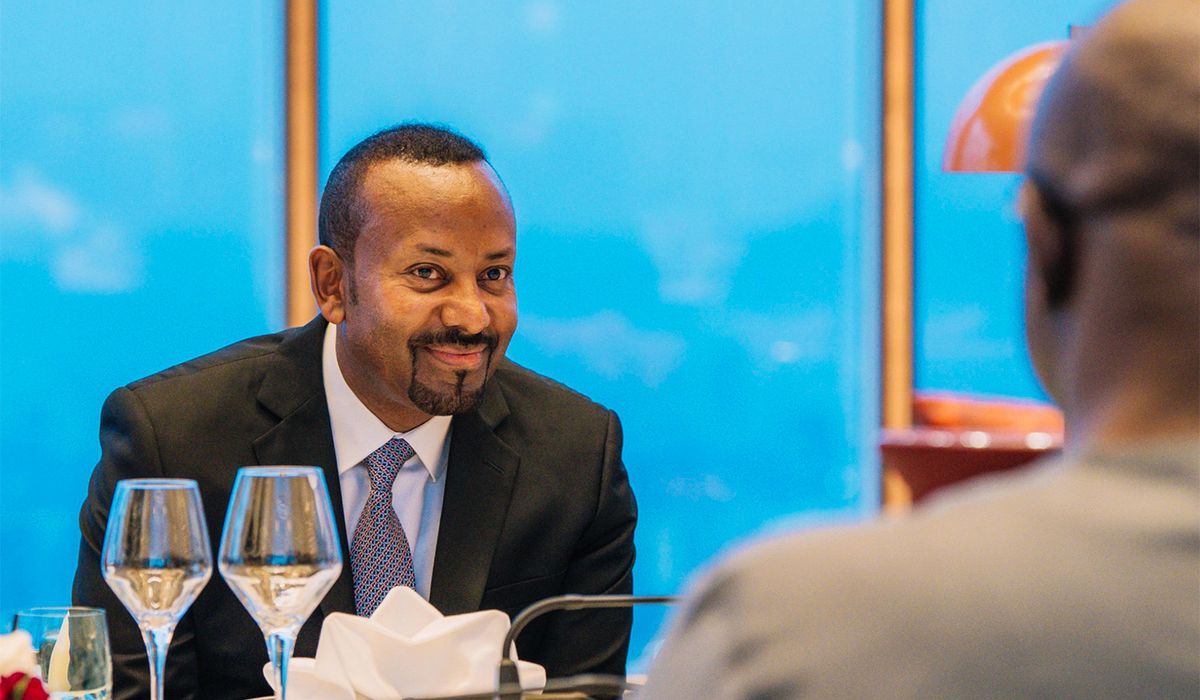
Ethiopian Investment Holdings is Africa’s largest sovereign wealth fund by assets under management, holding stakes in approximately 30 state-owned enterprises including Ethiopian Airlines, Ethio Telecom, the Commercial Bank of Ethiopia, and a 25 percent share in the Ethiopian Securities Exchange. Its CEO Brook Taye presented on three things: Ethiopia’s economic reform programme, EIH’s mandate as a co-investment platform, and the specific opportunities available to strategic partners. EIH reported 1.5 trillion Birr ($26 billion) in revenue across its subsidiaries in the first three quarters of the last fiscal year, and its CEO has described its model as taking equity stakes alongside partners to de-risk markets rather than crowding private capital out. Presenting that model to Afreximbank’s board during the retreat where the bank’s next capital allocation framework is being written is a well-timed pitch.
The two institutions are not starting from scratch. Afreximbank and Ethiopia’s Ministry of Finance held strategic talks in April 2026 on coordinated approaches to Africa’s economic resilience amid global pressures. The bank has previously extended trade finance facilities to Ethiopian banks and exporters, and its Pan-African Payment and Settlement System — PAPSS, adopted by the African Union as the payment infrastructure for the AfCFTA — runs through Ethiopia as an AU member state. Afreximbank’s board has also approved a $10 billion Gulf Crisis Response Programme to help member countries manage the petroleum product and fertiliser supply chain disruptions caused by the Middle East conflict — a programme directly relevant to Ethiopia, which spent $2.63 billion in supplementary budget on fuel costs earlier this year.
Strategic Plan VI — Impact 2026: Extending the Frontiers — targeted $90 billion in aggregate disbursements over five years and identified textiles and garments, renewable energy, water resources, and tourism as key growth sectors. All four are areas where EIH has active programmes. Ethiopia secured $13 billion in investment commitments at the Invest in Ethiopia 2026 Forum, with manufacturing, logistics, and energy among the dominant sectors. If Afreximbank’s Strategic Plan VII identifies Ethiopia as a priority deployment market — through EIH co-investment, export finance for Ethiopian manufacturers, or trade finance for the Ethio-Djibouti corridor — the country moves from a recipient of individual bank facilities to a structural partner in the continent’s most active development finance institution.
Afreximbank closed 2025 with a non-performing loan ratio of 2.43 percent on a $33.5 billion loan book, one of the strongest portfolio quality figures among multilateral lenders of its size. It raised $2 billion in syndicated funding in a single quarter from 31 international lenders, which signals the cost and availability of its capital.