
Debre Markos Airport Reopens After 30 Years. Ethiopian Airlines Now Flies There Three Times a Week.
The Negus Tekle Haymanot Airport in East Gojjam sat out of service for three decades. Upgraded now, its runway can handle a Boeing 737. The drive from Addis Ababa used to take seven hours.
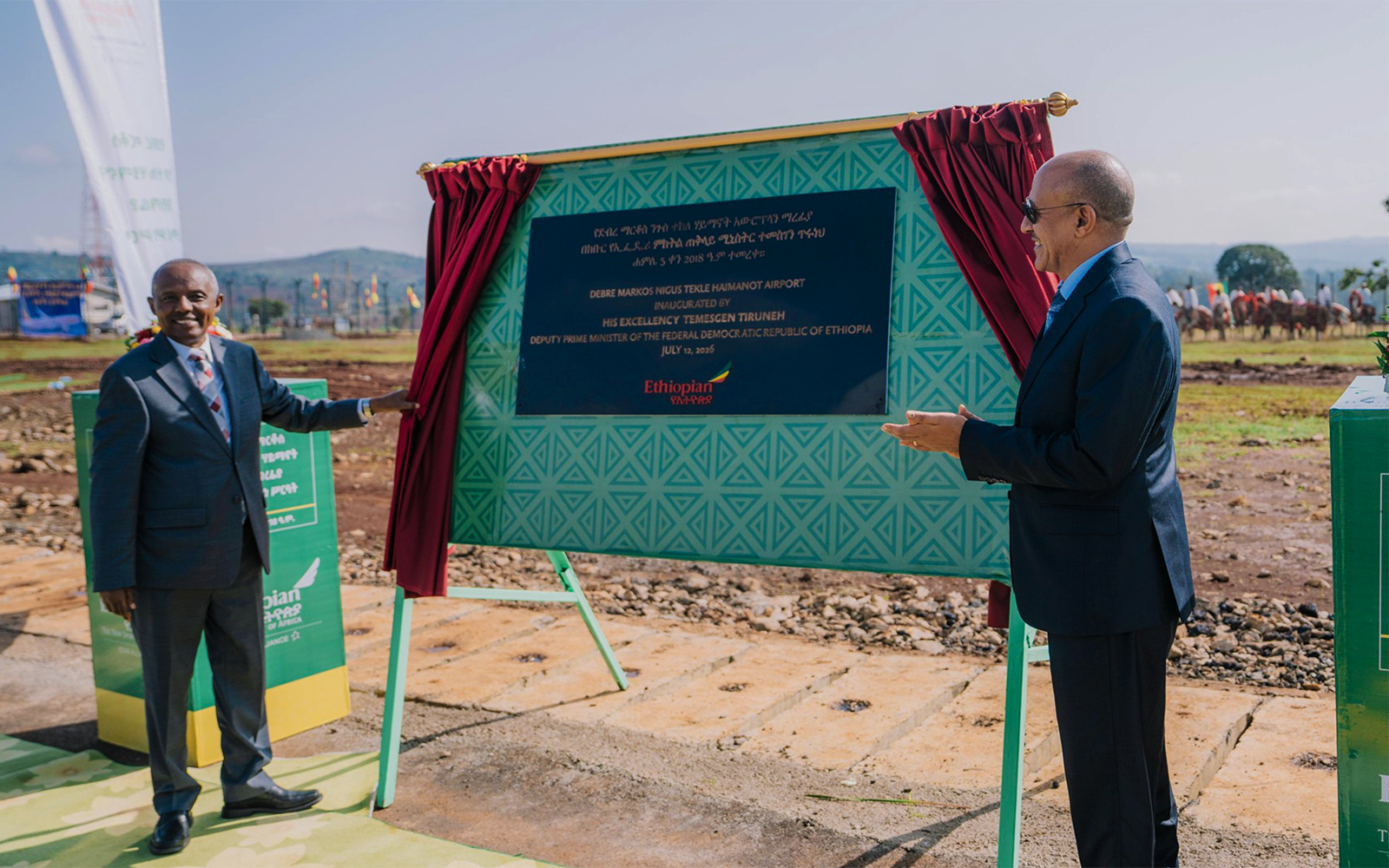
Debre Markos sits in the Ethiopian highlands about 300 kilometres northwest of Addis Ababa, on the plateau above the Blue Nile gorge in East Gojjam — the same stretch of Amhara Region that looks out over one of Africa’s most dramatic river landscapes. The town has about 120,000 people, sits at 2,400 metres above sea level, and until now it had not seen a commercial flight in 30 years. Travellers who needed to get there from Addis had two options: a seven-hour road journey, or a flight to Bahir Dar — 145 kilometres further north on the shore of Lake Tana — followed by a two-hour drive back south. Ethiopian Airlines inaugurated direct passenger service from Addis Ababa Bole to the newly upgraded Negus Tekle Haymanot Airport in May, operating three times a week on a DHC-8-Q400 turboprop. The airport was named after the 19th-century king who built the Church of Markos and gave the town its current name. The runway is 2,400 metres long and 30 metres wide — long enough for a Boeing 737. The flight from Addis takes under an hour.
An airport sitting unused for 30 years is common across sub-Saharan Africa. Dozens of regional airports built during the post-independence decades fell out of service as airline networks contracted, fuel costs rose, and road infrastructure improved enough to make driving marginally viable. Africa has more than 600 airports but only about 100 handle regular scheduled commercial flights. Debre Markos is one of several Ethiopian airports being brought back into service rather than built from scratch, provided the runway and terminal can be upgraded to current safety standards.
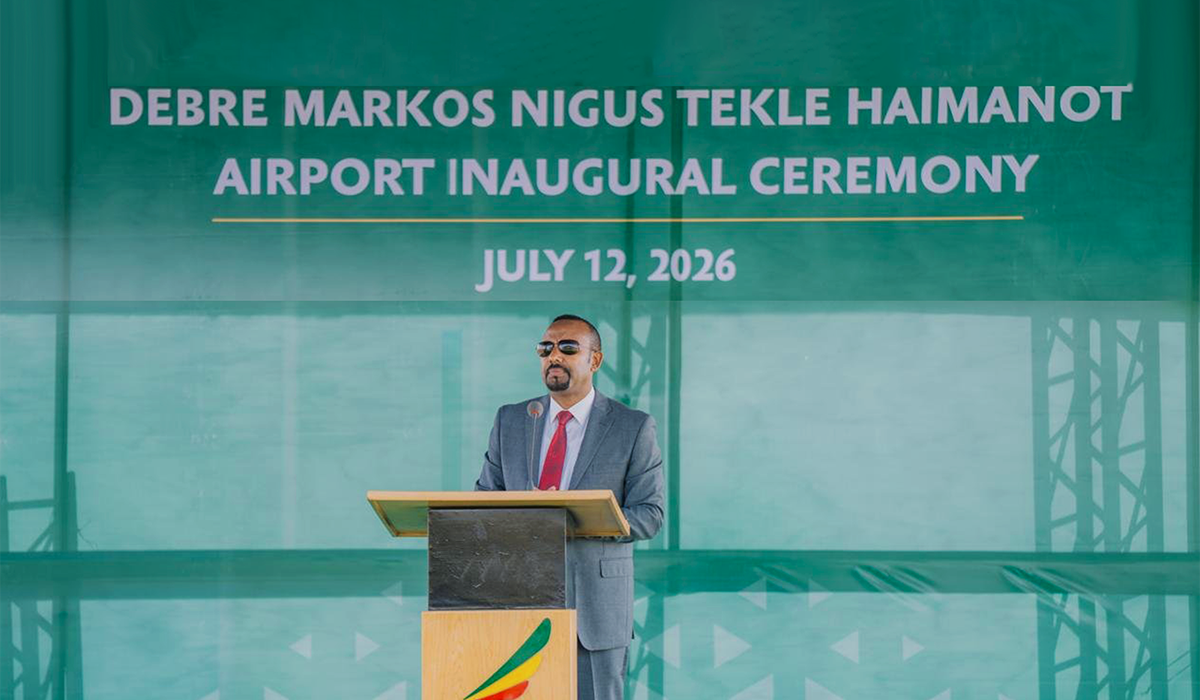
A 2,400-metre runway is practical for reliable all-weather commercial operations. The Q400 turboprop on the Debre Markos route needs around 1,400 metres to land comfortably, so the strip gives operational headroom. A Boeing 737-800 needs around 2,090 metres at sea level — at Debre Markos’s elevation of 2,400 metres, thinner air reduces engine performance and lift, pushing the requirement up by roughly 10 to 15 percent. The Negus Tekle Haymanot runway covers that with room, which means Ethiopian Airlines can move to a 737 if demand grows beyond what the Q400 can carry without any further runway construction.
Ethiopian Airlines announced three new domestic airports in February 2026 — Debre Markos, Gore Metu, and Negele Borena — expanding its domestic network from 23 to 26 destinations. A fourth, Mizan Aman, is expected to follow, bringing the total to 27. Kenya has 17 commercial airports, Tanzania 9, Uganda 5. Ethiopia, with more than twice the population of any of those countries, is building a domestic network to match its scale. The Bishoftu International Airport — under construction since January 2026 and projected to become Africa’s largest aviation hub — sits at the top of that strategy. Regional airports like Debre Markos sit at the base, feeding passengers into the hub and reducing the seven-hour road journeys that determine how connected the town feels to the rest of the country.
East Gojjam Zone has about three million people and an economy anchored in teff, wheat, and highland livestock farming. The zone sits between Lake Tana and the Blue Nile gorge, with tourism — the monasteries of Lake Tana, the Tis Abay waterfall, the Blue Nile gorge — growing but limited by the time cost of the overland journey from Addis. Ethiopian Airlines carried 22.9 million passengers in its last fiscal year, most of them on international routes. Its domestic network, now at 26 and growing toward 27 destinations, helps Ethiopian towns to be part of the national economy.