
Ethiopia’s Railway to the Sea Carried 9 Percent of Its Exports Two Years Ago. Now It Carries 50 Percent.
The Ethio-Djibouti Railway is expanding with new wagons, a logistics hub near the coffee belt, and online bookings. Trucks still move 84% of Ethiopia’s trade.
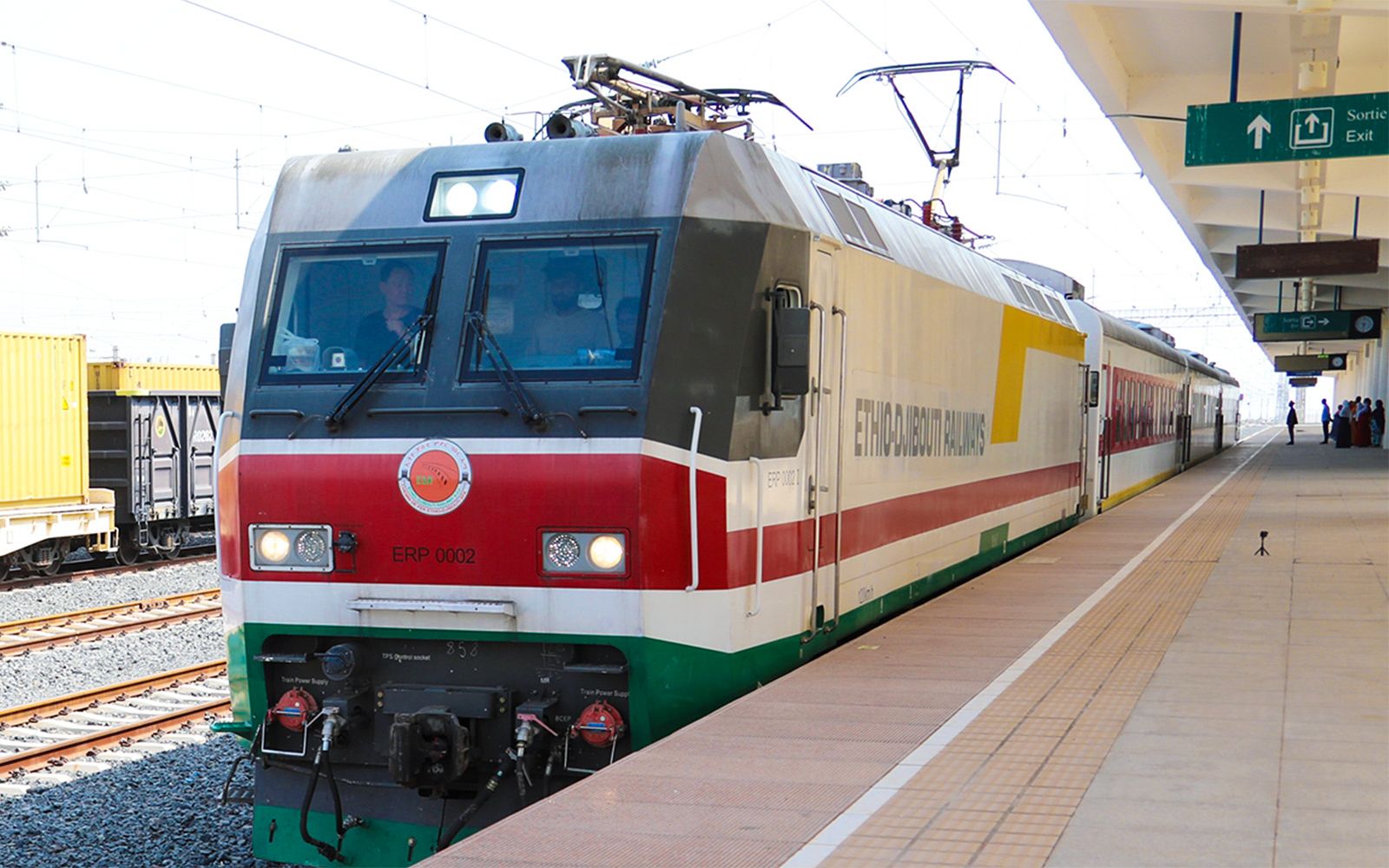
Two years ago the Ethio-Djibouti Railway carried 9 percent of Ethiopia’s exports through the Port of Djibouti. Today it carries 50 percent. Rail’s share of imports rose too, from almost nothing to 24 percent. Cargo volume on the line climbed from 1.8 million tonnes in 2024 to 3.2 million tonnes in 2025, a 78 percent jump in a single year, with each added tonne representing one fewer truck on the road. Ethiopia is landlocked, home to 130 million people, and dependent on one corridor for all its seaborne trade. The performance of that corridor shapes export prices and import costs across the economy, and right now the export numbers are still climbing.
The Addis Ababa–Djibouti Railway runs 753 kilometres of electrified, standard-gauge track from the capital to the Port of Djibouti, Africa’s first cross-border electrified railway. China’s Export-Import Bank financed its $4 billion construction, and Chinese state companies built it. Before the railway opened in 2018, trucking freight from Addis to Djibouti took more than three days over roads in poor repair; the train covers the same distance in under 20 hours. The metre-gauge line it replaced had sat decommissioned for ten years. Management passed from the Chinese contractor CRCC to Ethiopian and Djiboutian nationals in May 2024, and the jump from 1.8 to 3.2 million tonnes happened during the first full year of domestic control.
That first year produced 7 billion Birr in revenue for the railway, out of 13.7 billion Birr earned across all of Ethiopia’s transport and logistics sector combined. Civil aviation brought in 3.5 billion Birr; public transport, 2.5 billion. A railway that ran at a loss under its previous management is now the single largest revenue source in Ethiopian transport. It has also picked up a Multimodal Transport Operation licence, letting it handle freight forwarding, warehousing, and customs clearance alongside the rail haul itself — work that used to belong to separate companies.
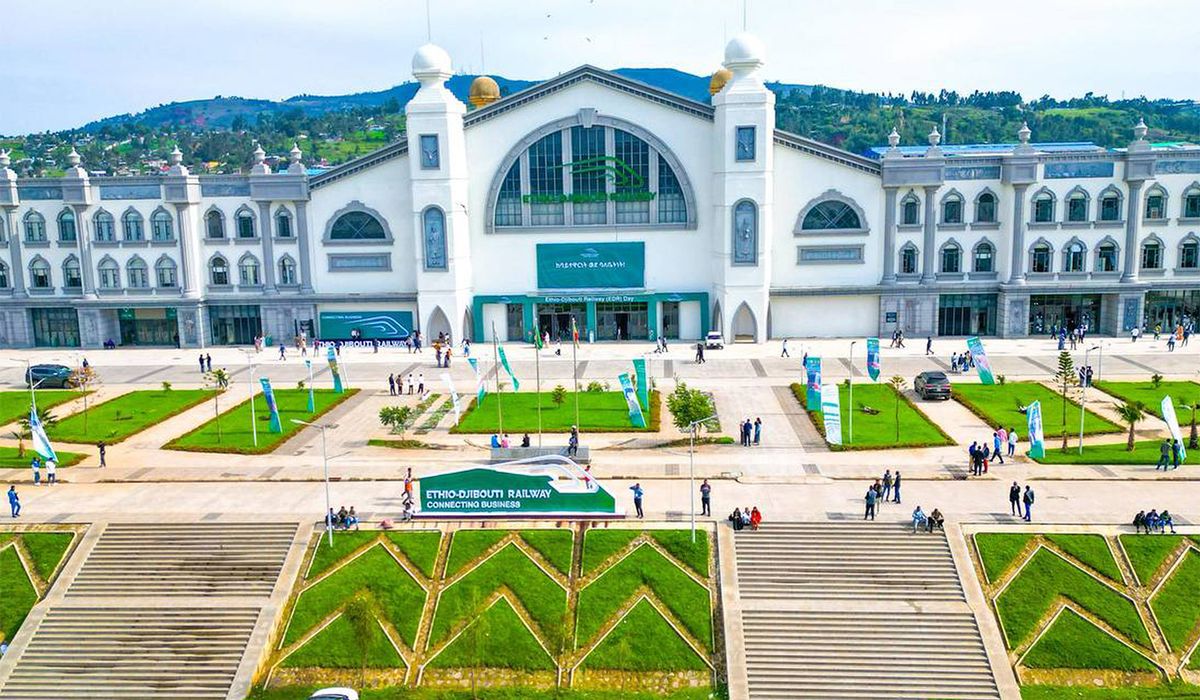
Three projects are underway at once. The first is a logistics hub. EDR is building the Sabata (Diimaa) Export-Import Logistics Centre next to the Sabata industrial area, at the point where Ethiopia’s western and southwestern coffee regions feed into the rail network — the zones that grow Jimma, Limu, Yirgacheffe, and the country’s other premium varieties. The site will handle bulk fertilizer coming in and containerised coffee, cereals, and livestock going out, with a direct rail link to Djibouti. Coffee earned Ethiopia $1.87 billion in the ten months to May 2025, more than any other export. Putting a logistics hub at the junction between the coffee belt and the railway shortens the distance, administratively and physically, between the farm and the buyer overseas.
Track expansion is the second piece. Crews have moved from hand-laid sleepers to pre-assembled track units installed by crane, with dedicated track-laying machines due to take over next. In October 2025 the company opened its first privately financed extension, a 3-kilometre branch connecting the AMG Industrial Park outside Addis Ababa to the Indode dry port. New rolling stock is arriving alongside the new track: centre beam wagons for steel manufacturers, gondola and flat container cars for bulk goods, and a repositioning effort that sends empty containers back from Djibouti to Indode so coffee and cereal exporters have units available during the quarterly export rush. EDR reports close to 40 percent annual growth in cargo and passenger capacity, with a near-term target of doubling current throughput to 4 million tonnes a year and a longer-range design target of 6.2 million tonnes by 2027.
The third piece is digital. EDR has moved its booking system online, adding secure payment, identity verification, and real-time tracking for every import and export shipment. A new Bulk Cargo Container system, launched with customs authorities in both countries, targets a specific bottleneck: shipping lines running short of containers and leaving bulk exporters waiting for available units. Freight forwarders, major shipping lines, and customs officials from both sides of the border have also been meeting to align paperwork and speed up clearance — the administrative layer where shipments often stall even when the trains and trucks are running on time. Djibouti’s two port facilities, the Doraleh Multi-Purpose Port and the Doraleh Container Terminal, have put roughly $70 million into rail lines that run directly into the port, cutting the time cargo spends moving between train and ship.
Rail still handles only 14 percent of Ethiopia’s total cargo; trucks carry the other 84 percent. Most of what the country imports — fertilizer, fuel, industrial equipment, consumer goods — still arrives by road from Djibouti, on a corridor that was the bottleneck before the railway existed and remains busy alongside it. Ninety percent of Ethiopia’s international trade moves through Djibouti’s ports in one form or another, which means every shipment shifted from truck to rail lowers costs and transit times somewhere in the economy. Moving the rail share meaningfully past 14 percent will take years, not months.
EDR earned 7 billion Birr in its first year of domestic management, grew cargo volume by 78 percent, and is now expanding its hub network, its rolling stock, and its booking platform at the same time. It is also the only viable route to the sea for 130 million people. Its design capacity is 11.2 million tonnes a year; it currently moves 3.2 million tonnes. Closing that distance — through the Sabata hub, the new wagons, the digital systems, and the track-laying machines now coming online — is the logistics story to watch over the next three years.