
S&P Global Buys Majority Stake in Africa's Agusto & Co. Rating Agency
The stake in Nigeria's Agusto & Co. lands as the continent's own rating project misses its second launch date
Agusto & Co. has rated Nigerian borrowers since 1992. On July 28, S&P Global agreed to buy a majority stake in it, Reuters reported.
The financial terms were not disclosed. S&P is taking control of the continent's oldest indigenous credit rater, headquartered in Lagos, with offices in Nairobi, Kigali and Accra. The deal still needs regulatory clearance in each of those markets and is expected to close in the second half of 2026. Agusto keeps its own methodology and continues operating as a separate entity, S&P said.
The purchase drops S&P into an argument it has spent a decade on the losing side of. African finance ministers have long accused the three global raters, S&P, Moody's and Fitch, of pricing in more political risk than the fundamentals support on every bond the continent sells. A study commissioned by the Africa Finance Corporation, cited by the African Union, puts a figure on the penalty: $75 billion a year, split between $28 billion in interest African governments pay above what comparable economies pay, and $46 billion in capital investors keep out of the continent because the ratings make it look imprudent to put it in, according to EBC Financial Group's analysis. That figure runs more than seven times the $10.7 billion Ethiopia says it needs to finance its current reform programme through 2028.
The African Union's answer has been years in the making: the Africa Credit Rating Agency, based in Mauritius, privately held to keep governments at arm's length, built to rate African debt on regional data rather than the sovereign-ceiling models the Big Three apply. Its first sovereign rating was due by June 2026, according to a Stiftung Wissenschaft und Politik assessment. That month has come and gone without one. Agusto & Co. sat alongside Côte d'Ivoire's Bloomfield Investment Corporation as the kind of homegrown rater the AU pointed to as its model. S&P now owns most of it.
Ethiopia is where the argument about who prices risk meets the country that has spent five years finding out what happens when the bill comes due.
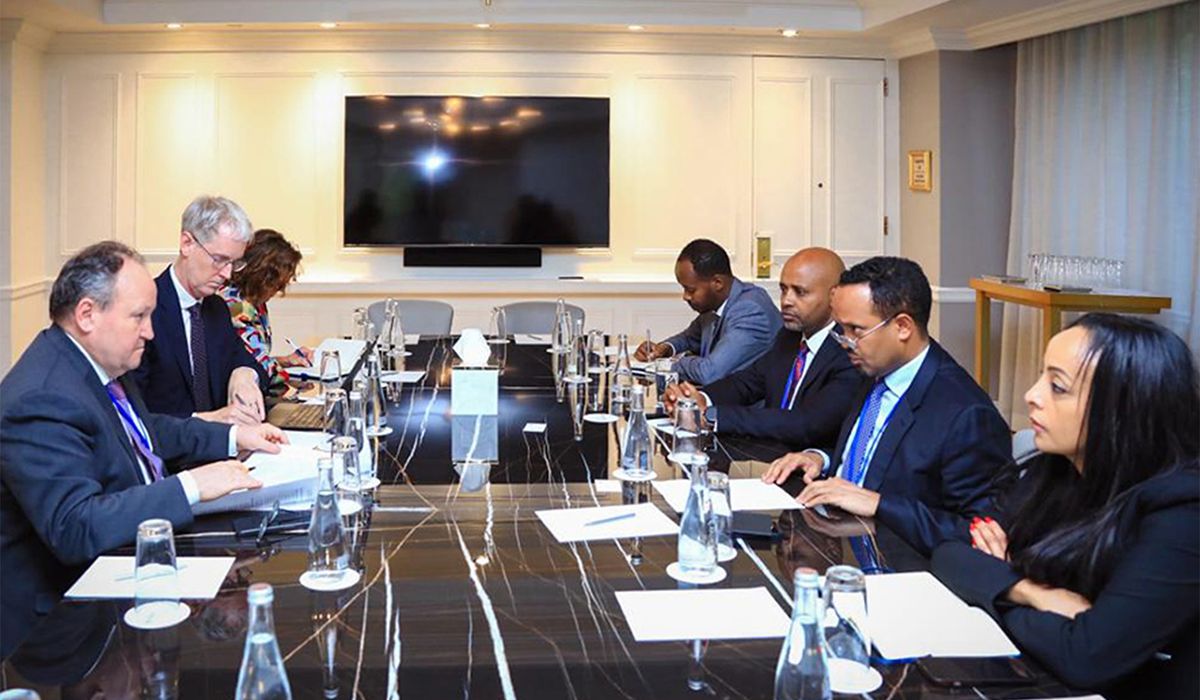
Ethiopia missed a $33 million euro bond coupon and becoming the third African country in as many years to fail on its debt, after Zambia and Ghana. It had already applied for treatment under the G20 Common Framework in February 2021. February 2026 marked five years since that application, with the government's own $4.9 billion relief package under the Framework still not fully resolved.
The bondholder track collapsed twice before it held. A January 2, 2026 proposal offering a 15 percent write-down was rejected by the Official Creditor Committee, co-chaired by China and France, on the grounds that private creditors weren't absorbing a loss comparable to what governments had already forgiven. Talks broke down again in late May. On June 28, Ethiopia and a committee holding roughly 45 percent of the bond finally settled on a 12 percent face-value cut, arrears of $99.4 million paid in full, and a new note worth about $880 million carrying 6.15 percent interest, repayable in installments through 2029, Africa Is a Country detailed. A warrant tied to Ethiopia's export earnings could pay bondholders up to $180 million more by 2037 if trade holds up.
The IMF called the settlement a step toward sustainability, days after completing the fifth review of Ethiopia's $3.4 billion loan programme, clearing roughly $468 million and bringing total disbursements to about $2.65 billion. Foreign reserves are projected to cover 2.1 months of imports this fiscal year, an improvement on the 0.7 months of two years earlier but still short of the three-month cushion the Fund treats as a floor.
None of that resolves the larger number. Ethiopia's total public debt stood at $68.9 billion by mid-2024, up 25 percent in five years, with external debt running at 180 percent of export earnings against the 150 percent ceiling the IMF treats as sustainable. China holds a larger share of that external debt than any other bilateral lender, about 28 percent, after extending upward of $13.7 billion in loans since 2000 for the Addis Ababa-Djibouti railway and other infrastructure, often on ten-year terms at close to commercial rates, against the roughly 35-year terms multilateral lenders such as the World Bank typically offer.
Zambia wrote the template Ethiopia followed almost line for line. It defaulted in November 2020, watched its debt ratio climb to 133 percent of GDP, and took close to four years to settle $6.3 billion with the same China-and-France-chaired creditor committee, of which $4 billion was owed to the Export-Import Bank of China alone, before reaching its own bondholder deal in 2024. Both countries fought the identical battle over comparability of treatment, the rule requiring bondholders to match whatever haircut governments already accepted, and both took roughly the length of a presidential term to close the file.
Ethiopia's restructuring carries its own market test. Under the June deal, the government can choose to issue up to $1 billion in new international debt at market rates instead of paying bondholders in cash. When that bond prices, it will be the first real signal of whether a rating agency that now owns part of one of Africa's own alternatives assesses the continent's risk any differently than it did before.