
Inside ‘Mirchaye’: How a New App Digitally Registered Millions of Ethiopian Voters for the First Time
Ethiopia built its voter roll on a digital ID system that didn’t exist five years ago. The election is one use case. The registry is the real story.
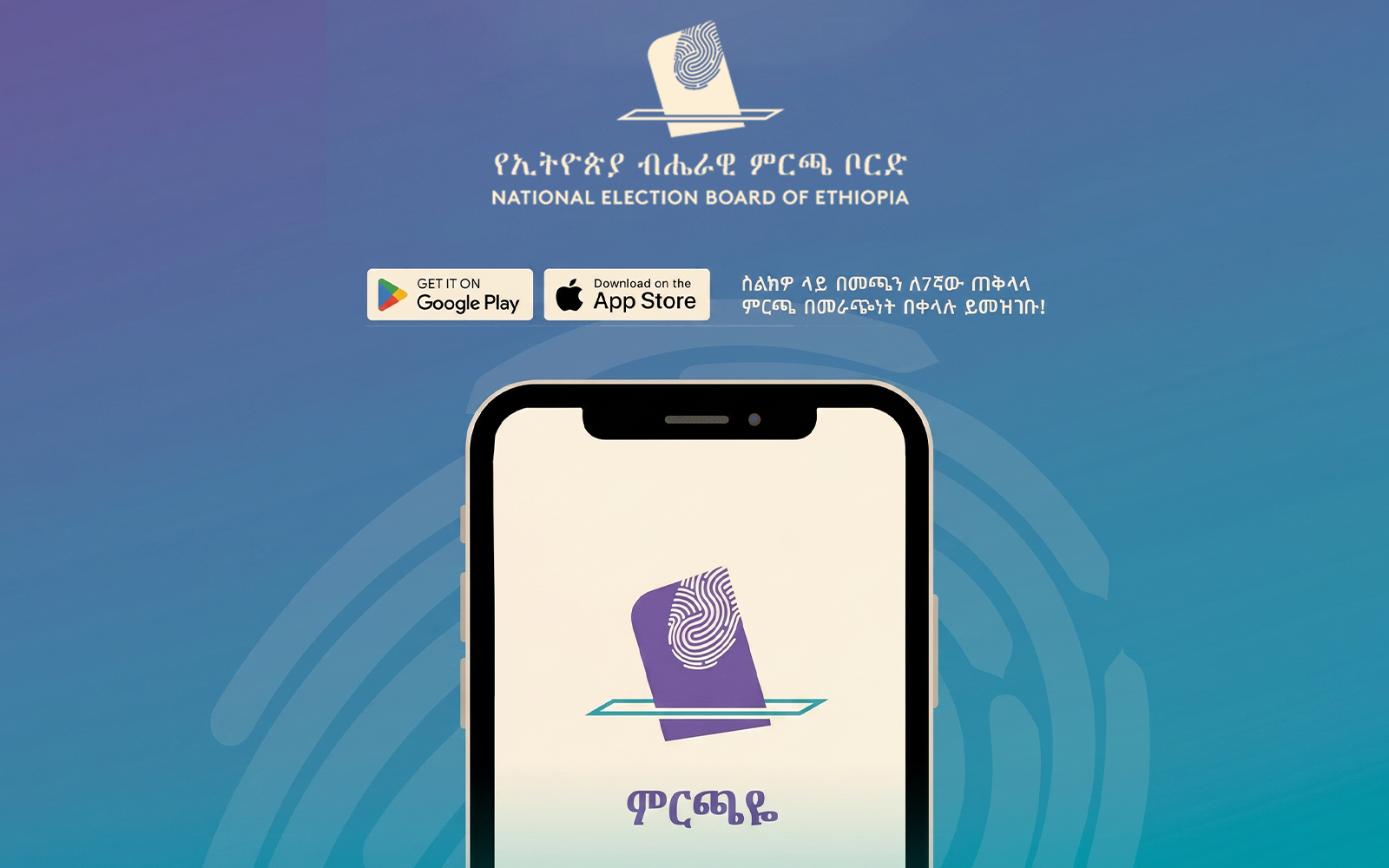
Before the first ballot was cast on June 1, 2026, Ethiopia had already done something more technically difficult than running an election: it built, from scratch, a verified digital identity layer for tens of millions of citizens and then anchored a national vote to it. The Mirchaye app — launched January 5, 2026, and whose name translates simply as “My Choice” — is the most visible part of that infrastructure. But it is not the most important part.
The foundation underneath Mirchaye is Fayda, Ethiopia’s national digital ID programme: a 12-digit biometric identifier operating on a “one person, one identity” principle, launched in 2021 and now embedded across 91 government agencies. By April 2026, Fayda enrollment had exceeded 40.3 million, up from 16.4 million as recently as June 2025. That acceleration is not coincidental. The election created the deadline that forced enrollment at scale, and Mirchaye was built to sit on top of it.
The architecture matters. Mirchaye runs three registration tracks simultaneously: mobile self-registration via Fayda authentication, web-based registration via smartphone or computer, and assisted registration on tablets distributed to field officers at polling centres. Digital registration was prioritised in areas with 3G coverage and above, in direct coordination with Ethio Telecom — which is itself a Fayda enrollment partner, with SIM cards now formally linked to Fayda numbers. The tiered design is what allowed the system to function in Gambella and Afar, not just Addis Ababa. For the areas where connectivity didn’t reach, field tablets handled it.
It did not go smoothly. In March 2026, Capital Ethiopia reported widespread system crashes at polling centres, with tablets failing to process data and power outages compounding connectivity gaps. NEBE established a special task force to monitor the SIM card and connectivity status of every tablet in the field. Registration was extended. The 50.5 million figure arrived anyway. The lesson is not that the system worked perfectly — it is that it was resilient enough to absorb failure and still reach a number no Ethiopian election had reached before.
NEBE made one deliberate decision that reveals how seriously the institution takes public trust: voting and counting remained entirely paper-based. The digital layer handled registration and identity verification. The ballot itself stayed physical. That hybrid design is a pragmatic acknowledgement that the infrastructure is new and public confidence in it is still being built.
The longer implication sits beyond this election cycle. What Mirchaye produced — as a byproduct of registering voters — is a deduplicated, biometrically verified registry of more Ethiopian citizens linked to a persistent national ID. Fayda is already required for banking transactions, school enrollment, and SIM card registration. The voter roll is one more integration in a system that is quietly becoming the backbone of how the Ethiopian state identifies its population. The government that wins on June 1 inherits not just a mandate, but a registry. What it does with that registry — for service delivery, for taxation, for financial inclusion, or for surveillance — is the story that comes next.