
Gulf-Africa Economic Dialogue hosted by Ethiopia's Institute of Foreign Affairs in Addis Ababa, Ahead of 2027 GASPI Summit.
Ethiopia’s Institute of Foreign Affairs convened a high-level Gulf–Africa economic dialogue at the Sheraton Addis on July 22, ahead of the 2027 GASPI Summit in Abidjan.
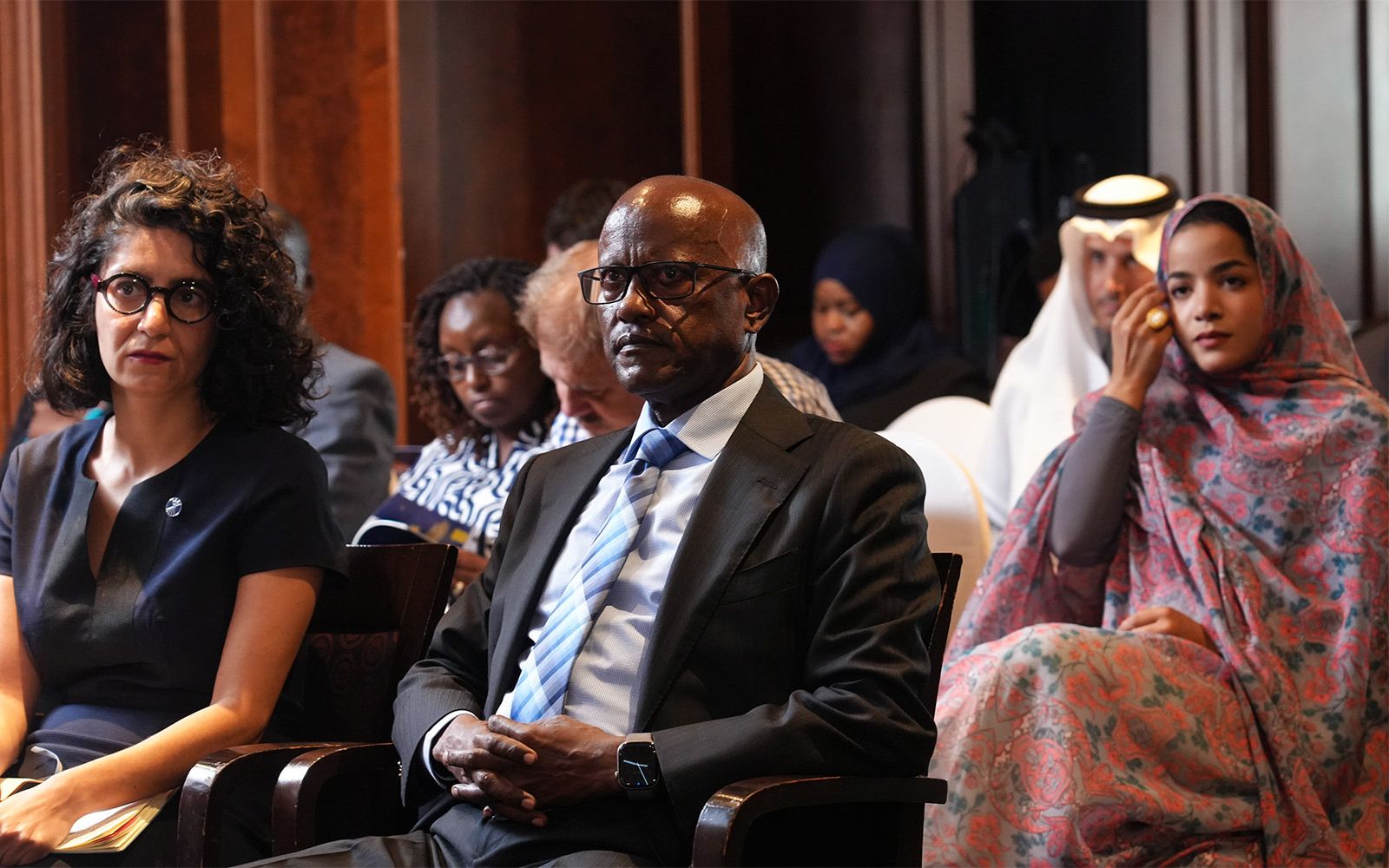
Ethiopia’s Institute of Foreign Affairs, Gravitas Sovereign and Strategic Advisory, and ODI Global Advisory convened a closed-door dialogue on Gulf–Africa economic cooperation at the Sheraton Addis on July 22. Policymakers, investors, and diplomats from both regions attended. The session is one of a series of regional consultations — Rabat, Johannesburg, and Accra are the others — feeding into the agenda for the inaugural Gulf–Africa Strategic Partnership Initiative Summit, scheduled for Abidjan in 2027. GASPI is a bi-annual platform organised by Gravitas, with ODI Global as knowledge partner and legal firm Sidley Austin among its supporting institutions. Addis Ababa was chosen for this session, not incidentally, because it hosts the African Union and serves as the continent’s de facto diplomatic capital.
GCC countries import 85 percent of their food and spent $73 billion on food imports in 2022. Six countries — the UAE, Saudi Arabia, Qatar, Kuwait, Bahrain, and Oman — with a combined population of around 60 million people, produce almost none of their own food in a region where temperatures exceed 45 degrees Celsius in summer and where water is the most constrained resource in the world. Africa, by contrast, holds 60 percent of the world’s uncultivated arable land, has a population of 1.4 billion growing toward 2.5 billion by 2050, and grows food that the Gulf buys. UAE–Africa trade surged 30 percent to $100 billion in 2025. Saudi Arabia’s trade with sub-Saharan Africa has grown twelvefold over the past decade. The investment that runs alongside that trade is now substantial: between 2012 and 2025, GCC foreign direct investment in Africa rose to over $179 billion, led by the UAE at $64.3 billion, Saudi Arabia at $28.7 billion, and Qatar at $9.2 billion. The GCC is now the third largest source of foreign direct investment into Africa behind China and the United States.
Gulf investment in Africa has concentrated heavily in a small number of countries — Egypt, Morocco, Sudan, and Ethiopia receive the largest shares — and in a small number of sectors: logistics, ports, real estate, and energy. ODI Global Advisory Director Sasha Kapadia, speaking at the Addis dialogue, said the key challenge is identifying the barriers that delay investment and deploying risk-sharing mechanisms to accelerate project delivery. Those barriers are specific: fragmented regulatory environments across 54 African countries, a cost of capital for African projects that can run 10 to 15 percentage points above comparable Gulf or Asian project finance rates, infrastructure gaps that mean a Saudi agribusiness investing in Ethiopian farmland still faces road, power, and logistics constraints that add cost and time to every tonne of produce it tries to export. Africa’s overall FDI hit a record $97 billion in 2024, up 75 percent from 2023, but the distribution is uneven and the bankable project pipeline, meaning projects that are scoped, permitted, and ready for a financing term sheet, is shorter than the capital available to invest in it.
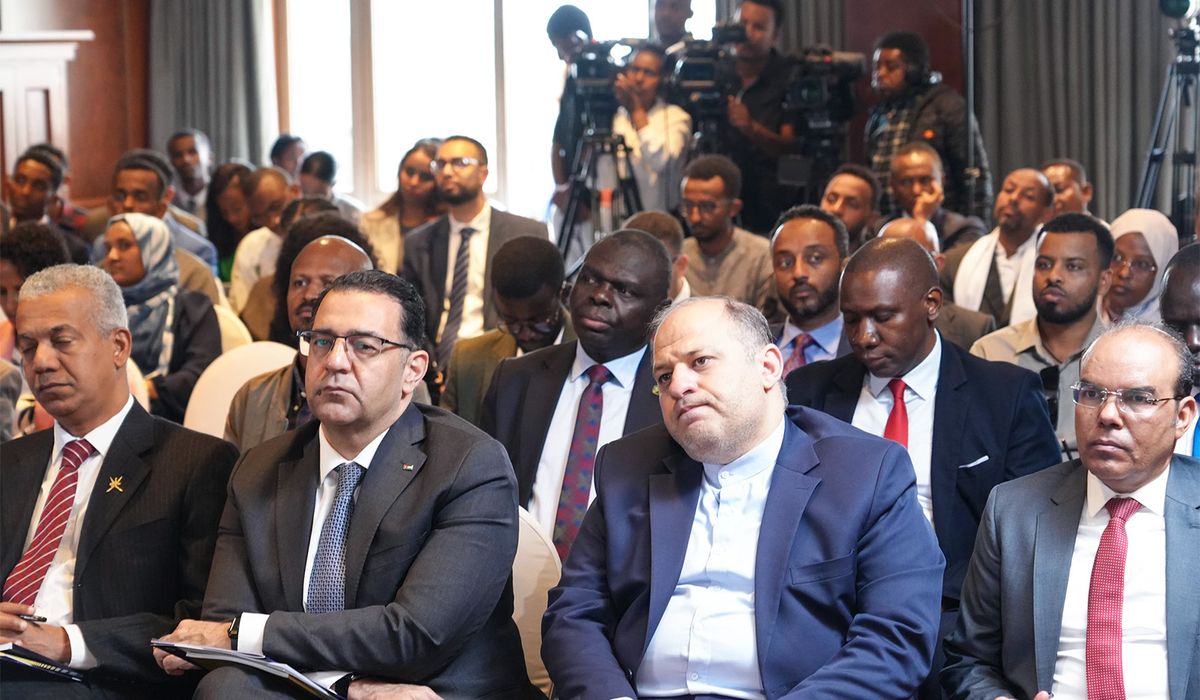
Ethiopia sits at the intersection of several Gulf interests simultaneously. It is the largest agricultural economy in East Africa, the second most populous country on the continent, the host of the African Union, and a country that has received more Gulf capital than any other in the region over the past eight years. The UAE wired $3 billion in emergency support to Ethiopia in 2018, has since committed $2.3 billion more through the Birr float period, and has 113 active investment projects in the country. Saudi Arabia’s SALIC has agricultural investments across the continent with Sudan as the primary focus. Qatar Investment Authority has committed $2 billion to African solar and wind projects including in Ethiopia. Ethiopia’s own government has explicitly framed its foreign policy around strategic self-reliance, which in practice means maintaining active relationships with Gulf capitals, Washington, Beijing, and Brussels simultaneously rather than locking into any single dependency. Hosting the Addis dialogue for GASPI is consistent with that posture: Ethiopia is present at the table where the terms of Gulf–Africa engagement are being defined.
The GASPI Summit in Abidjan in 2027 will bring together 27 African countries and the six GCC states in a bi-annual format that alternates between Gulf and African host cities. The Addis consultation, alongside those in Rabat, Johannesburg, and Accra, is feeding agenda-setting work into that summit. The stated purpose is not to announce investments — bilateral investment announcements happen continuously outside of summit formats — but to establish a standing institutional platform for Gulf–Africa dialogue at the level of heads of state and ministers, modelled loosely on the EU–Africa Summit format but between two regions that have no standing multilateral forum for structured engagement. GCC countries pledged 73 investment projects worth $53 billion across Africa in 2023 alone. The investment is already flowing. What GASPI is trying to create is the governance layer that makes those commitments easier to execute and harder to reverse when political winds shift.
The Gulf has capital and a food security problem. Africa has land, population, and a capital access problem. These are complementary deficits, and the investment flows of the past decade confirm that the market is already recognising that.