
Ethiopia's Development Bank to Offer Cheap Loans to Women and War-Affected Regions That Normally Can't Get Bank Financing
Two agreements signed on June 2 address the two groups least likely to access formal credit in Ethiopia: people in disaster-affected regions, and women.
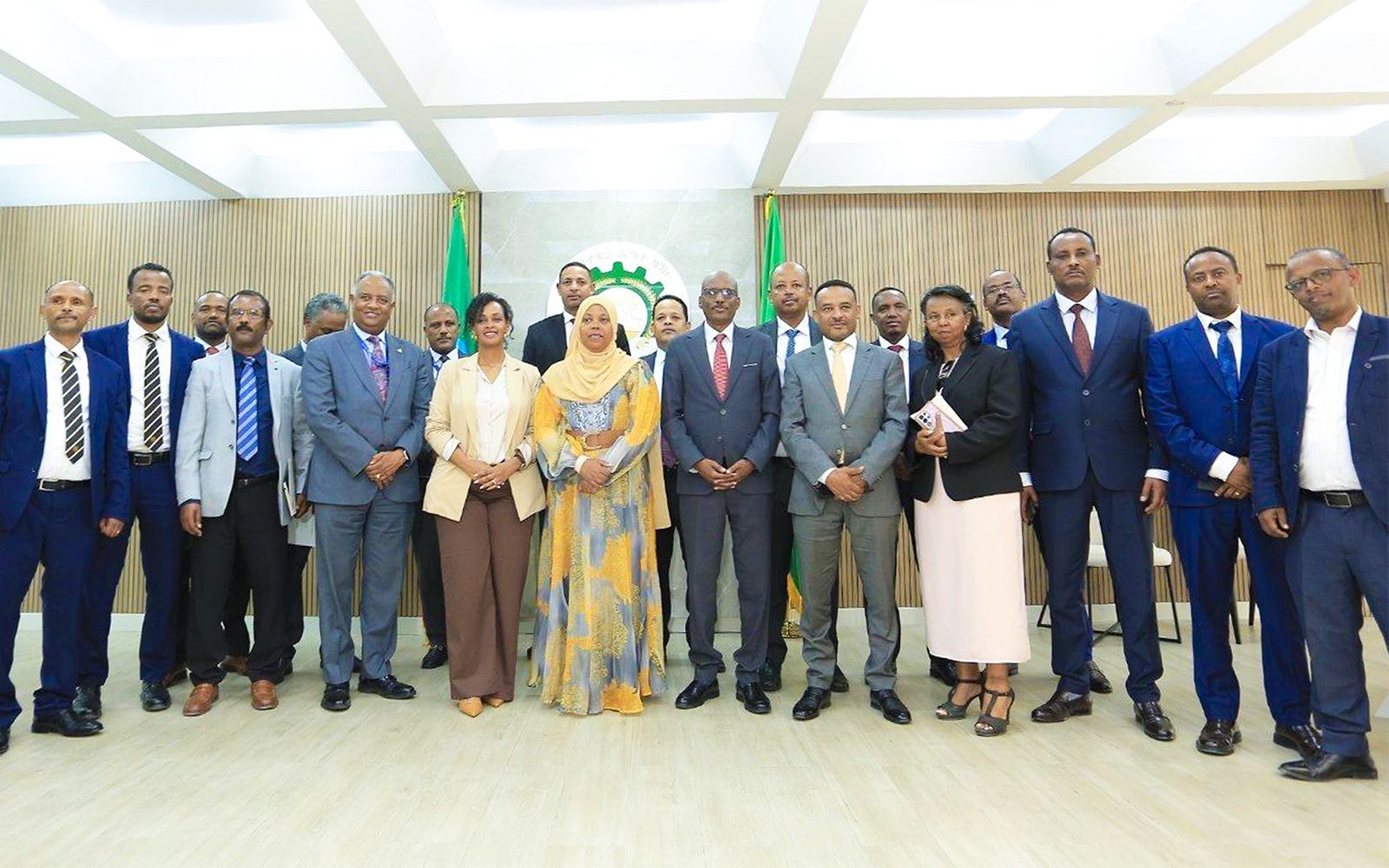
On June 2, 2026, the Development Bank of Ethiopia signed two separate agreements at its Addis Ababa headquarters. The first, with the Ministry of Labour and Skills, directs low-interest credit through commercial banks and microfinance institutions to communities in conflict- and disaster-affected regions. The second commits credit lines specifically for Small and Medium Enterprises run exclusively by women and youth, with a focus on the agricultural sector. Both agreements use the same delivery mechanism: the DBE lowers its wholesale lending rate, commercial banks and microfinance institutions borrow from it, and are explicitly urged to pass those lower rates through to the end borrower. The model is not new. The question that has consistently gone unanswered in Ethiopia is whether the intermediaries actually do.
The structural problem both agreements are trying to address is documented and severe. 70 percent of micro-enterprises and 40 percent of SMEs in Ethiopia face difficulties accessing credit from formal financial institutions. Only 45 percent of the population holds a bank account, and fewer than 30 percent of adults save with formal institutions. For women, the gap is measurably worse: women in Ethiopia are 1.5 times less likely than men to receive a formal loan, and when they do, men receive more than twice the loan capital on average. Access to finance is identified as the primary business constraint by 41 percent of micro-enterprises, 36 percent of small enterprises, and 29 percent of medium enterprises run by women. These are not marginal operators. They are the majority of Ethiopia’s private sector.
The conflict-region agreement addresses a different but compounding dimension of the same problem. Communities in Amhara, Afar, and parts of Oromia and Tigray have experienced displacement, asset destruction, and the collapse of local economic activity at a scale that formal lenders treat as uninsurable risk. Collateral — land, equipment, livestock — has been destroyed or is legally inaccessible. Business histories have been interrupted. Credit scores, where they exist, reflect pre-conflict activity that no longer reflects the borrower’s current position. A 2024 EU-KfW programme channelled 2.2 billion Birr through the Development Bank of Ethiopia to conflict-affected MSMEs in Afar, Amhara, and Tigray, specifically because standard commercial credit terms made those borrowers unreachable without a concessional intermediary. The June 2 MoU extends that logic under domestic rather than donor architecture — the DBE absorbing the rate subsidy from its own balance sheet rather than from a European grant.
The central risk in any wholesale credit line of this kind is the pass-through rate. The DBE can lower its lending rate to commercial banks and microfinance institutions; it cannot compel those institutions to pass the reduction through to the final borrower at a proportional level. Ethiopia’s National Financial Inclusion Strategy II explicitly identifies this as a systemic weakness, noting that total private sector credit grew at 28 percent annually between 2016 and 2020 while MSMEs, the agricultural sector, and lower-income households did not benefit proportionally. The minister’s statement at the signing ceremony — urging commercial banks and microfinance institutions to disburse funds “at a proportional, affordable rate” — is a public acknowledgement of exactly this risk. The DBE has structured the agreement as a directive as well as a credit facility: institutions that channel the funds are expected to pass through the subsidy, not absorb it as margin. Whether that expectation is enforced, and through what mechanism, is the operational question the agreement does not yet answer on paper.
The second agreement — targeting women and youth SMEs in agriculture — operates in a sector where the financing gap is both largest and most economically consequential. The World Bank estimates that closing key gaps in women’s economic participation, including access to finance, could increase Ethiopia’s GDP by up to $3.7 billion annually. Globally, women-owned MSMEs face a finance gap of approximately $1.9 trillion — 34 percent of the total MSME finance gap across 119 emerging markets. In Ethiopia’s agricultural sector specifically, where women provide the majority of smallholder labour, the combination of collateral requirements — land titles that women disproportionately do not hold — and commercial lending rates calibrated for larger, lower-risk borrowers has kept women-led agricultural enterprises outside the formal credit system almost entirely. The DBE’s decision to structure a dedicated credit line for this category, channelled through microfinance institutions with agricultural reach, is a direct attempt to address the collateral and rate barriers simultaneously.
The Development Bank of Ethiopia has a mixed track record on similar instruments: rain-fed agricultural loan defaults have historically challenged the portfolio, and the institutional capacity of microfinance institutions to reach conflict-affected regions remains uneven. What the June 2 signing represents is a stated commitment by the Ethiopian state that the two groups least served by its formal financial system — people in post-conflict communities and women-led small businesses — are now explicitly named in the DBE’s mandate. The National Bank of Ethiopia launched its first Women’s Financial Inclusion Scorecard in March 2025, making Ethiopia only the second country globally after Pakistan to implement such a tool. The DBE’s MoUs are the credit delivery side of the same institutional shift. Whether the Birr reaches the borrower it was intended for is the story that begins now.