
Addis Ababa Opens 22 Kilometers of New Riverfront as Urban Renewal Efforts Accelerate
The 22-kilometer development combines recreation areas, river conservation initiatives, and public infrastructure as part of Addis Ababa's ongoing urban development efforts.
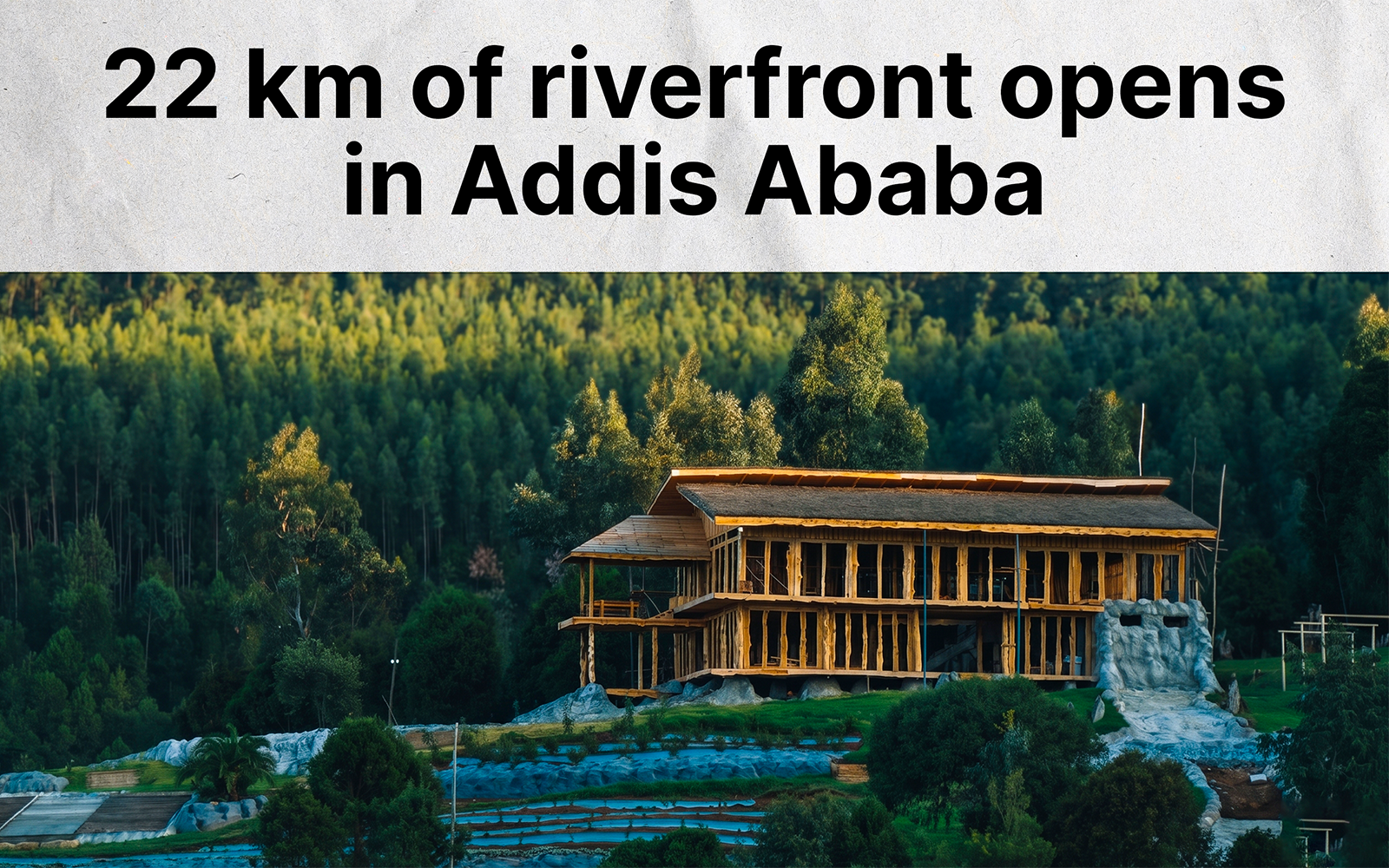
Ethiopia inaugurated the Entoto to Kechene Medhanealem Riverside Development Project on June 2, 2026, marking the completion of a 22.25-kilometer corridor that has converted degraded riverbanks into vibrant green spaces featuring advanced soil conservation, river purification systems, fruit parks, and integrated pedestrian and cycling trails. The project, which spans a distance roughly equivalent to walking from Lower Manhattan to Central Park and back, represents more than environmental restoration—it signals to investors that Ethiopia's capital is systematically addressing the urban infrastructure deficits that have long constrained economic productivity in one of Africa's fastest-growing cities.
For international observers unfamiliar with Addis Ababa, context matters: Ethiopia's capital is home to approximately 6.2 million people in its metropolitan area, making it comparable in size to London or Singapore, yet until recently, the city's green space per capita averaged just 0.37 square meters—smaller than a standard parking space and far below the World Health Organization's recommended minimum of 9 square meters. This riverside transformation directly addresses that deficit while tackling another critical challenge: Ethiopia's urban population is expanding at more than 5 percent annually, one of the highest rates on the continent, creating intense pressure on infrastructure, housing, and public services. The World Bank has identified Addis Ababa as facing unprecedented urbanization challenges, including flooding, pollution, and inadequate public spaces, all of which deter investment and reduce the quality of life for the city's growing population. By converting 22.25 kilometers of polluted riverbanks into functional green corridors, the project demonstrates that Ethiopian policymakers are prioritizing the long-term livability and climate resilience that modern businesses and skilled workers increasingly demand when choosing where to locate operations.
The economic rationale extends far beyond aesthetics. Research consistently shows that urban green spaces increase nearby property values by up to 3.6 percent, creating wealth effects for homeowners and expanding the municipal tax base that funds public services. River restoration projects deliver measurable flood protection benefits, with studies showing that every dollar invested in floodplain restoration can prevent approximately five dollars in future flood losses—a critical consideration for Addis Ababa, where seasonal flooding has historically damaged infrastructure and disrupted economic activity. The project's integration of pedestrian and cycling infrastructure aligns with evidence that walkable and bike-friendly cities attract greater economic activity, with businesses in areas with improved cycling and walking infrastructure reporting increased revenues and property values rising in bike-friendly neighborhoods. Individual project sites along the riverside corridor are already creating approximately 400 jobs for local residents and accommodating nearly 500 daily visitors, demonstrating immediate employment and tourism benefits that multiply through the local economy as spending circulates. The broader riverside development program, which encompasses multiple corridors totaling over 48 kilometers across eight rivers, is part of a comprehensive $1 billion investment in urban renewal that signals Ethiopia's commitment to transforming its capital into a modern, competitive African business hub.
This infrastructure investment arrives as Ethiopia implements broader economic reforms, including the liberalization of foreign exchange markets and efforts to attract foreign direct investment into manufacturing and services sectors. The World Bank recently approved $250 million in additional financing for urban development and job creation programs in Ethiopian cities, recognizing that well-planned urbanization is essential for sustaining the country's economic growth trajectory. Addis Ababa's riverside transformation directly supports Ethiopia's Climate-Resilient Green Economy strategy, which aims to achieve middle-income status while maintaining low carbon emissions and building adaptive capacity to climate shocks. The project's features—soil conservation, river purification, fruit-producing parks—deliver multiple co-benefits including improved water quality, enhanced food security through urban agriculture, reduced urban heat island effects, and increased biodiversity in an otherwise densely built environment. For the approximately 1.3 million residents living along the broader riverside development corridors, these improvements translate into tangible quality-of-life gains: cleaner air, reduced flood risk, accessible recreation spaces, and safer routes for walking and cycling that promote public health while reducing transportation costs for low-income households.
The timing of the inauguration—immediately following Ethiopia's 7th General Election—also carries political economy significance, demonstrating continuity in urban development priorities regardless of electoral cycles and signaling to investors that infrastructure commitments will be honored across political transitions. The project's comprehensive approach, which integrates environmental restoration with economic opportunity creation and public health improvements, provides a replicable model for other rapidly urbanizing African cities facing similar challenges of balancing growth with sustainability. As Addis Ababa continues to expand, with the metropolitan area population projected to exceed 7.5 million by 2030, investments in green infrastructure like the Entoto to Kechene Medhanealem corridor will prove essential for maintaining the city's competitiveness, livability, and resilience in an increasingly urbanized and climate-constrained world. For investors evaluating opportunities in Ethiopia, the riverside project serves as concrete evidence that the country is building the urban foundations—clean environment, functional public spaces, climate resilience, and quality of life amenities—that attract and retain the skilled workforce and innovative businesses driving 21st-century economic growth.