Ethiopia Untangles Its Supply Chain: A New Rail Hub Outside the Capital Promises to End Weeks of Port Delays
Designating Galaan as a multimodal hub connects Ethio-Djibouti freight trains directly to local trucks, cutting importer delays and easing congestion at Ethiopia's main dry port.
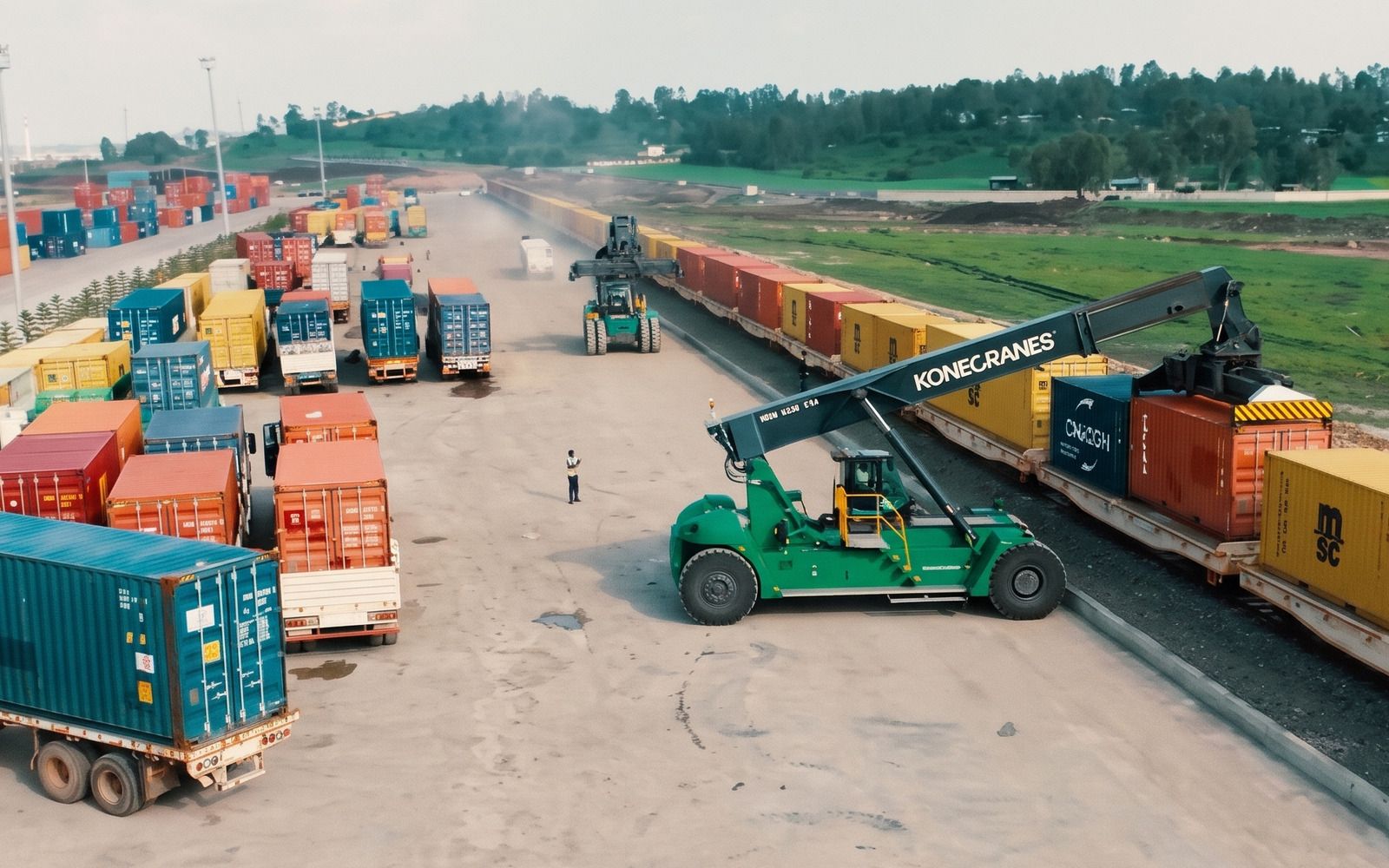
For international manufacturers and local importers doing business in East Africa, moving goods into Ethiopia has long meant facing one of the most frustrating supply chain bottlenecks on the continent. But this week, Ethiopia took a major step to untangle its import-export plumbing. The Ethio-Djibouti Railway Share Company (EDR) announced that the Galaan Multipurpose Port (GMP)—a massive logistics facility located just outside the capital, Addis Ababa—has officially been approved as a Multimodal Logistics Hub Destination. This means that massive shipments arriving from the coast can now be cleared, stored, and transferred to local trucks directly at Galaan, fundamentally changing how freight moves into central Ethiopia.
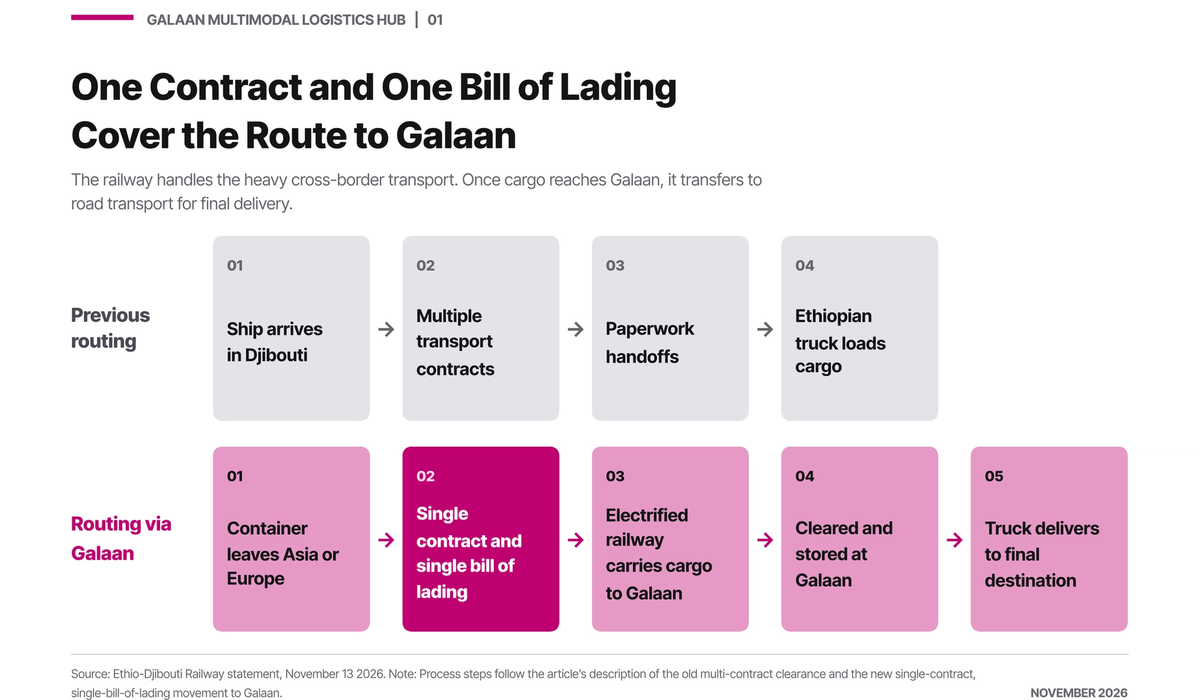
For supply chain managers, "multimodal" is much more than a government buzzword—it is a legal and operational upgrade that saves millions in delays. Previously, cargo coming off ships in neighboring Djibouti often had to be cleared through a fragmented system of multiple transport contracts and paperwork handoffs before it could finally be loaded onto an Ethiopian truck. Under the new multimodal status at Galaan, a business can now ship a container from Asia or Europe all the way to the Galaan terminal under a single transport contract and a single bill of lading. The railway handles the heavy cross-border transport, and once the cargo reaches Galaan, it seamlessly transfers to road transport for final delivery.
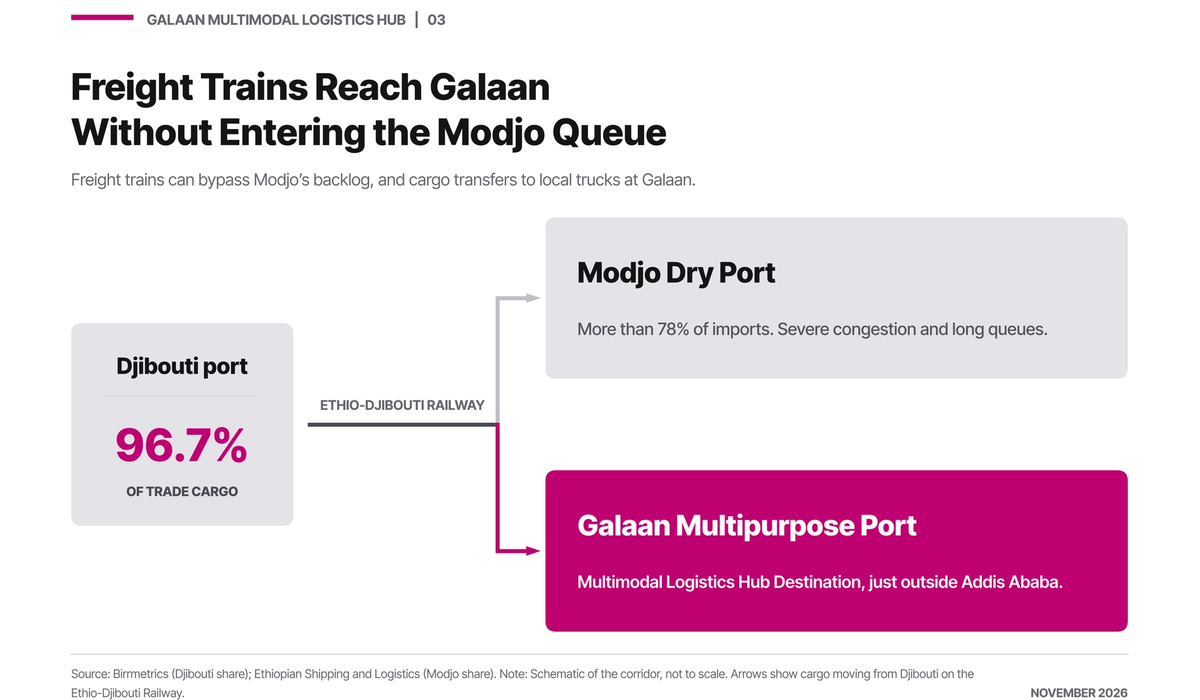
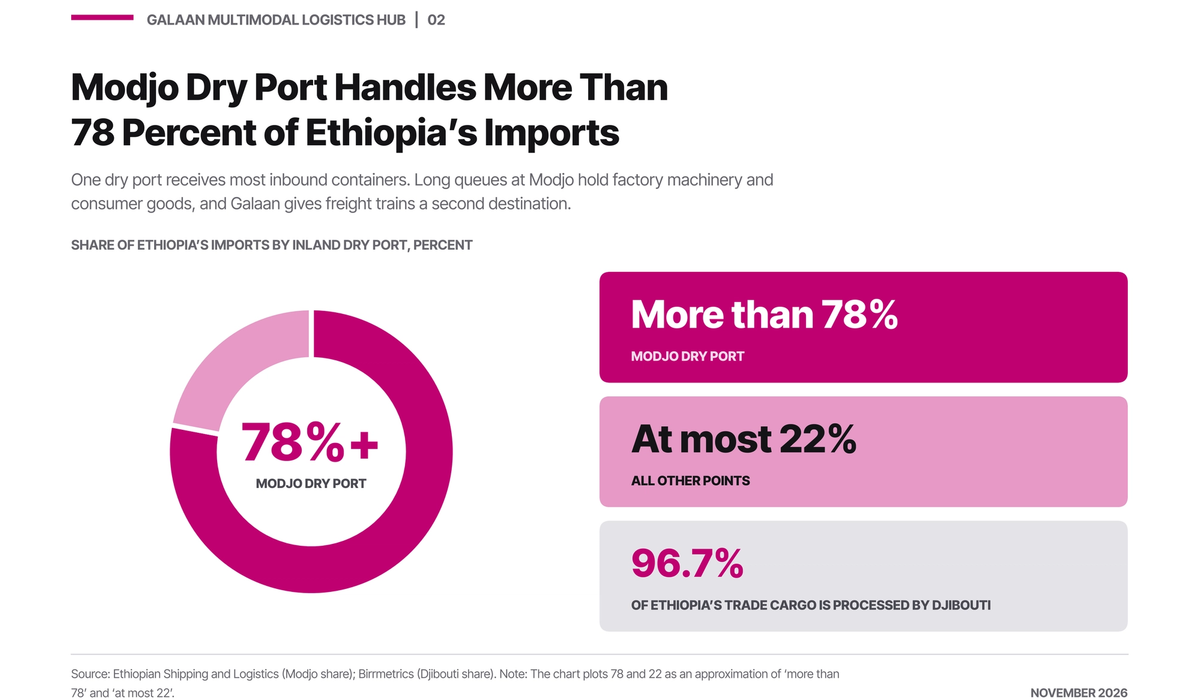
Technically, this move is a critical pressure release valve for the entire national economy. Currently, the staggering majority of Ethiopia's inbound container traffic is forced through a single chokepoint: the Modjo Dry Port, which handles more than 78 percent of the nation's imports. Because Djibouti still processes 96.7 percent of Ethiopia’s total trade cargo, moving 17.6 million tonnes of goods annually, Modjo frequently suffers from severe congestion, trapping factory machinery and consumer goods in long queues. By upgrading the Galaan terminal to handle integrated multimodal operations, the government has essentially opened a highly efficient second front that allows freight trains to bypass Modjo’s backlog entirely.
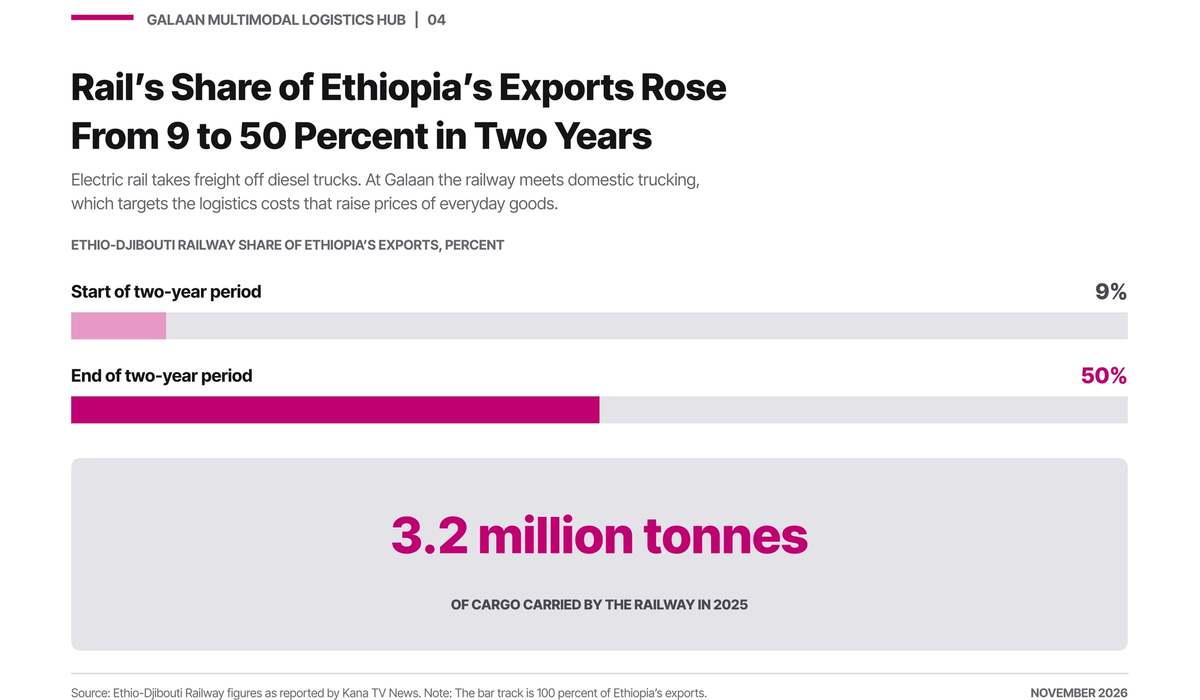
Bringing Galaan online as a fully integrated hub is the latest victory in Ethiopia’s ongoing shift from diesel trucks to electric rail. Over the last two years, the Ethio-Djibouti Railway has surged in efficiency, growing its share of Ethiopia's exports from 9 percent to 50 percent, and carrying 3.2 million tonnes of cargo in 2025. By reinforcing the strategic link between this electrified railway and domestic trucking at Galaan, planners are directly attacking the high logistics costs that have historically inflated the price of everyday goods, building the physical plumbing needed to make Ethiopian trade faster, cheaper, and more globally competitive.